Huawei might have a way to avoid some of the worst consequences of tightening US trade restrictions, provided it’s willing to be patient. Financial Timessources claim Huawei is planning a dedicated chip factory in Shanghai that would make parts for its core telecom infrastructure business. It would be run by a partner, the city-backed Shanghai IC R&D Center, and would be considered experimental until it’s ready to make chips Huawei can use.
The plant would start by making chips based on a very old 45-nanometer process before moving to 28nm chips by late 2021. That would be advanced enough to make chips for smart TVs and Internet of Things devices, the tipsters said. It would reach 20nm by late 2022, when it could make “most” of its 5G cellular hardware.
Between this and a stockpile of chips, Huawei could theoretically keep its telecom hardware business running with relatively little disruption. While its chips from 2021 onward might lag behind international rivals, they could be good enough for the domestic market until Huawei can further improve its designs.
Huawei and the IC R&D Center both declined to comment to FT, with the research firm calling the matter “rather sensitive.”
Huawei might not have to worry about its long-term future if reports are accurate. As you may have noticed, though, there’s no mention of phones in this plan. Mobile devices need highly advanced chip processes to remain competitive at the high end (the Kirin 9000 in the Mate 40 Pro is a 5nm chip), and the reported Shanghai plans wouldn’t help. Huawei can turn to fabrication allies like SMIC for more modest phone chips, but it’s still likely to scale back its phone offerings once their existing supplies dry up.
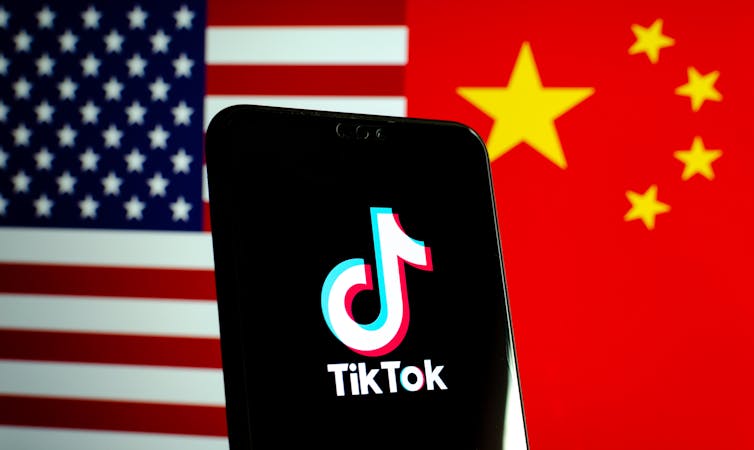
Less than three years after merging with Musical.ly, TikTok looked like it might just achieve something many have tried but few have accomplished: becoming an actual competitor with Facebook and Instagram.
After weeks of threats, the president delivered an ultimatum to TikTok and its owner ByteDance: sell the app’s US operations to an American company or it would be banned. He gave the company little more than a month — until Sept. 15 — to find a buyer and figure out how to disentangle itself from its Chinese parent company.
More than a month later, TikTok’s future is still uncertain despite multiple interested buyers. China has fired back with new trade rules that could prevent a new owner from gaining access to TikTok’s most important feature: its recommendation algorithm.
Now, as the clock ticks down to Trump’s mid-September deadline, TikTok and its potential buyers are frantically working to figure out what it all means for a deal. An algorithm-less TikTok is a very different TikTok, and there’s no guarantee that Microsoft or Oracle would be able to replicate the app’s current recommendation magic.
At the same time, Facebook has seized the opportunity to launch its own TikTok competitor with Reels. The Instagram feature so far hasn’t had a ton of success in the US, but the company is pushing it hard in other countries.
All that leaves TikTok in a precarious position. While the current uncertainty hasn’t affected its ability to keep its millions of users scrolling, that could change. If the company isn’t able to secure its future in the US, or is forced to relinquish the technology that makes it so addictive, the app’s influence could fade as quickly as it started.
TikTok’sattempt to sell itselfand avert apossible US banmay run into some complications. TheWall Street Journalreportsthat China has unveiled new restrictions on AI technology exports that could affect TikTok. The new rules bar the exports of tech like content suggestions, text analysis and voice recognition unless a company receives a license — technology TikTok uses in some cases.
The Chinese government has issued a not-so-subtle warning to TikTok parent ByteDance in turn. Government advisor Cui Fan told the state-run Xinhua News Agency that ByteDance should “seriously and cautiously” consider stopping its sales talks for TikTok. Even if ByteDance no longer has a stake in TikTok, there would probably be some technology transfers that could violate the rules, the advisor said.
The country’s Ministry of Commerce argued that the export list changes were overdue after remaining the same since 2008. It was important given the breakneck pace of technological improvement and China’s increasingly competitive output, according to officials.
Neither ByteDance nor the Commerce Ministry has commented on the new rules.
The move escalates an already intense dispute between China and the US. The two sides are already locked in a trade war, and the US has already implemented trade restrictions on companies like Huawei and ZTE over alleged security risks. The pressure on TikTok to drop ByteDance is an extension of this. In that regard, it’s not surprising that China is countering with tighter export limits. This theoretically pressures the US to make concessions and allow more access to Chinese tech.
TikTok may drop its ties to China in very short order. Reuters sources claim TikTok’s Chinese owner, ByteDance, has agreed to sell its stake in the social network’s US operations to avert a possible ban. The agreement would have Microsoft protect American user data, according to the report, but Microsoft wouldn’t necessarily own TikTok itself — it would leave the possibility of another company taking stewardship.
The company told Engadget that it didn’t comment on rumors, but that it was “confident in the long-term success of TikTok.” It pointed to a video response to talk of a ban where US General Manager Vanessa Pappas said TikTok was “not planning on going anywhere.” Microsoft declined to comment. The White house has already declined to comment on whether or not this move would prevent a ban.
There’s no guarantee this would be enough. President Trump said on Air Force One that he would ban TikTok outright and rejected talk of allowing a sell-off. He suggested he would use an executive order or emergency economic powers to block the company. However, he also said this before word of a possible US deal emerged. If TikTok sheds its Chinese links, a ban might not have much effect.
A ban could have serious consequences if it remained intact for a significant period, and not just to TikTok’s bottom line. The company has about 100 million American users, and a sudden shutdown could both make people scramble to alternatives and possibly create resentment. It could affect creator money and TikTok jobs, too. In that regard, the social media giant might not have much choice if it wants to prevent chaos.
Update 8/1 5:08PM: The Wall Street Journal and The Information claim Microsoft has “paused” talks with TikTok following Trump’s suggestion he would ban the app. The tech companies were reportedly hoping to finish a deal by Monday, sources for the news outlets said. This doesn’t mean they’re scrapping the deal, but they apparently want “clarity” on what happens next.
TikTok will exit the Hong Kong market and cut off access to all residents of the semi-autonomous region, parent ByteDance told Reuters. The company has said that it’s concerned Hong Kong may fall under China’s jurisdiction after new security laws came into effect. “In light of recent events, we’ve decided to stop operations of the TikTok app in Hong Kong,” a spokesperson said.
Though ByteDance is based in China, the TikTok app itself is not available in the nation. Rather, China has access to another, similar app called Douyin. In addition, the company (led by former Walt Disney exec Kevin Mayer) recently decided to stop using Chinese moderators for the app and has said that no data is stored in China. All of that was done to avoid the impression in the US and other markets that the app or its data is controlled by the Chinese government.
All those efforts aren’t necessarily helping, though. When asked about it by Fox News, US Secretary of State Mike Pompeo said that the US is “certainly looking at” banning Chinese social media apps like TikTok. In addition, the US Senate recently asked intelligence services to probe TikTok to see if it presents any kind of a national security risk. TikTok was recently banned in India, along with dozens of other Chinese apps.
Facebook recently said it would “pause” responses to data requests from Hong Kong, despite the new security law that gives police the power to order companies to remove content. However, Apple, which still has a large presence in China, complied last year with communist government demands to remove a Hong Kong protest-tracking app.
ByteDance has continued to try to distance itself from China and by exiting Hong Kong now, is avoiding the appearance of any potential conflicts. TikTok previously said that it has 150,000 users in the city and a source told Reuters that it’s a money-losing region for the company.