Rafael Henrique/SOPA Images/LightRocket via Getty Images
Facebook regularly deals with accusations of anti-conservative bias, but a new report suggests it may have been particularly forgiving. Washington Postsources say Facebook has limited punishment for Donald Trump allies who repeatedly violate rules against misinformation, in some cases removing strikes that could have led to reduced News Feed distribution or even bans. The social network pulled a repeat infraction claim against Donald Trump Jr. on Instagram due to fear of a “backlash” from the penalties that would follow, according to the reported insiders.
Other Trump family members also had strikes removed, the sources said. A pro-Trump PAC (America First Action) and other organizations that have repeatedly posted known false information also appeared to have escaped consequences. Facebook said it would label some posts that break its rules, but the Post found examples of clearly false claims from Rush Limbaugh, Gateway Pundit and others that hadn’t received those disclaimers.
Facebook spokeswoman Andrea Vallone didn’t directly challenge the report, noting the social media giant wouldn’t penalize accounts in “rare cases” when a rating wasn’t “appropriate or warranted.” The representative stressed that “many” pages the Post found had been punished for spreading falsehoods, but declined to say how or what the thresholds were to avoid opportunities for “gaming the system.”
If accurate, the exceptions wouldn’t be surprising. Like Twitter and other internet heavyweights, Facebook is aware that Trump and Republicans currently hold power that could lead to regulation and other legal action. Trump’s order demanding a rethink of the Communications Decent Act’s Section 230 is widely considered retaliation against Twitter for fact-checking one of his posts, and Facebook itself caught flak from Senate Republicans for limiting a New York Post story making hotly disputed allegations against Joe Biden’s son Hunter.
Stlll, this isn’t going to help quiet accusations that Facebook has separate standards for different people and groups. Critics have contended that Facebook is allowing misinformation to spread as a consequence, and that it shouldn’t have to fear retaliation when allegations of free speech violations haven’t held up in court. Its bid to please both sides of the American political discourse may have ultimately stoked tensions.
If you’re running Joe Biden’s presidential campaign and want to make a last-minute push for the youth vote, what do you do? Set up a Fortnite island, apparently. Mashablereports (via Kotaku) that the Biden-Harris campaign has introduced a “Build Back Better with Biden” island map that aims to inform and motivate you through mini games. You add solar panels and efficient air conditioning to an EV factor, install 5G towers to improve broadband, and build a research facility.
To no one’s surprise, there are also conspicuous efforts to rally the vote, including a virtual polling station and signs asking you to make a voting plan. You’ll also find nods to the public images of Biden and Harris, such as a “No Malarkey Station” and a quest to collect Harris’ sneakers.
You can try the Fortnite map yourself using the code 0215-4511-1823.
This isn’t the first game-based campaign effort from Biden and Harris. They already have their own Animal Crossing campaign signs. Other Democrats are using gaming to get out the vote, too — Alexandria Ocasio-Cortez recently used a high-profile Among Us stream to inspire voters.
Will this work? It’s hard to say. It’s coming extremely late in an election when many have voted early. And let’s be honest: it’s hard to escape the whiff of a “how do you do, fellow kids?” attempt at relevancy from candidates who’ve likely never touched Fortnite. Still, this shows the extent to which Biden’s crew is trying to court voters during a pandemic when safe in-person rallies are difficult or impossible. Don’t be surprised if candidates try more game-based voter rallies going forward, at least when they think younger voters will be receptive.
It’s easy to be worried when you cough these days — is it COVID-19, or are you just clearing your throat? You might get a clearer answer soon. MIT researchers have developed AI that can recognize forced coughing from people who have COVID-19, even if they’re otherwise asymptomatic. The trick was to develop a slew of neural networks that can distinguish subtle changes indicative of the novel coronavirus’ effects.
One neural network detects sounds associated with vocal strength. Another listens for emotional states that reflect a neurological decline, such as increased frustration or a “flat affect.” A third network, meanwhile, gauges changes in respiratory performance. Throw in an algorithm that checks for muscular degradation (that is, weaker coughs) and it provides a more complete picture of someone’s health.
The AI is highly accurate in early tests. After the team trained its model on tens of thousands of cough and dialog samples, the technology recognized 98.5 percent of coughs from people with confirmed COVID-19 cases. It identified 100 percent of people who were ostensibly asymptomatic, too.
There are clear limits. The technology isn’t meant to diagnose symptomatic people, as they might have other conditions that produce similar behavior. And while it’s quite capable, you wouldn’t want to use this for a definitive verdict on whether or not you’re infected.
This isn’t a theoretical exercise, though. The scientists are developing a “user-friendly” app that could be used as a prescreening tool for the virus. You might only have to cough into your phone each day to determine if it’s safe for you to head outside. The researchers even suggest this could put an end to pandemics if the tool was always listening in the background, although that’s a big “if” when it would likely raise privacy issues.
Earnings week seems to arrive just a little bit sooner every fall — or it could just be the nonstop cheering from Big Tech who had a banner quarter thanks to the COVID quarantine turning many of us into a captive audience for their products and services. Here are some headlines from the week that was.
What, you thought your child was just going to indoctrinate themselves to life within the surveillance state? For free? In this economy? Not a chance. Not when Jeff Bezos can ding you for a trio of Benjamins on the way out.
Speaking of Jeff Bezos getting even more wealthy, Amazon made an extra $26 billion in sales during Q3 2020 thanks to our shelter in place rules and everybody embracing delivery for, well, everything.
Oh the woes of Tesla ownership. First the company offered a $2,500 infotainment system upgrade that gave customers access to YouTube, Netflix, Hulu — none of which should be watched while operating a motor vehicle mind you, unless you spring for the $10,000 FSD mode (though it’s being called is a “distant second” to GMC’s SuperCruise) — but had to ditch the existing AM, FM and Sirius functions. Now the company is offering to restore the FM and Sirius capabilities that used to be there with the addition of a new tuner and antenna for the low, low discount price of $500.
Netflix is yet again getting a little more expensive. The company announced last week that its standard plan will now cost $14, a dollar increase, and its premium plan will rise two dollars to $18 a month. I’m old enough to remember when cord cutting actually saved people money.
Under Armour is looking to shed some weight, namely its MyFitnessPal and Endomondo apps. The former is being put up for sale with a $345 million price tag, the latter is simply being shut down, all so that the company can achieve a greater degree of “investment flexibility.”
Huawei might have a way to avoid some of the worst consequences of tightening US trade restrictions, provided it’s willing to be patient. Financial Timessources claim Huawei is planning a dedicated chip factory in Shanghai that would make parts for its core telecom infrastructure business. It would be run by a partner, the city-backed Shanghai IC R&D Center, and would be considered experimental until it’s ready to make chips Huawei can use.
The plant would start by making chips based on a very old 45-nanometer process before moving to 28nm chips by late 2021. That would be advanced enough to make chips for smart TVs and Internet of Things devices, the tipsters said. It would reach 20nm by late 2022, when it could make “most” of its 5G cellular hardware.
Between this and a stockpile of chips, Huawei could theoretically keep its telecom hardware business running with relatively little disruption. While its chips from 2021 onward might lag behind international rivals, they could be good enough for the domestic market until Huawei can further improve its designs.
Huawei and the IC R&D Center both declined to comment to FT, with the research firm calling the matter “rather sensitive.”
Huawei might not have to worry about its long-term future if reports are accurate. As you may have noticed, though, there’s no mention of phones in this plan. Mobile devices need highly advanced chip processes to remain competitive at the high end (the Kirin 9000 in the Mate 40 Pro is a 5nm chip), and the reported Shanghai plans wouldn’t help. Huawei can turn to fabrication allies like SMIC for more modest phone chips, but it’s still likely to scale back its phone offerings once their existing supplies dry up.
If you’ve been having problems syncing data across your Apple devices, you’re not alone. Apple is reporting (via 9to5Mac) outages across several of its iCloud services, including backups, calendars, Find My, photos and even sign-ins. The company only noted on its status page that “some users” were affected, but the failures appear to have started around 9AM Eastern and were still ongoing as of 1PM.
We’ve asked Apple for comment. Other major services like Apple Music, FaceTime and Siri were still working properly as we wrote this.
The issue comes weeks after an outage that affected both iCloud and Apple’s media services. It also follows mere days after the debut of Apple One, where iCloud storage (also affected by the outage) plays an important role. The timing is less than ideal, to put it mildly, even if this is likely to be a small interruption in the grander scheme of things.
Update 11/1 5PM ET: The outages appear to have been resolved later in the afternoon.
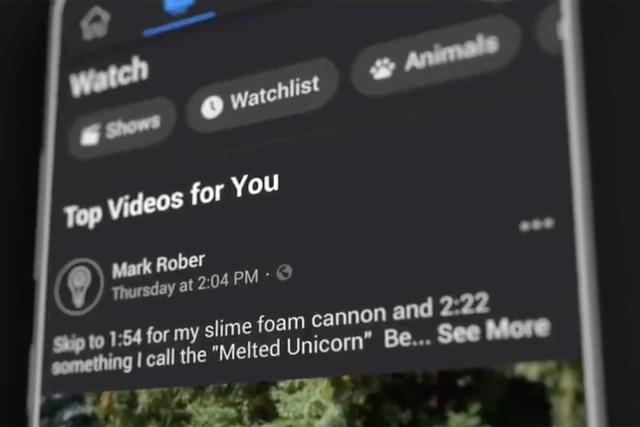
Facebook is finally testing a dark mode in its mobile app beyond a handful of users. The social network has teamed up with code sleuth Jane Manchun Wong to confirm that it’s publicly testing dark mode on Android and iOS. Just who’s getting the option isn’t clear, but MacRumorsnoted that many more people were reporting access to the night-friendly option.
If you have the option, you’ll see a Dark Mode button in the Settings & Privacy section under the Menu tab. You can force it on or off, or leave it up to your system-level settings. If you have an OS-level dark mode switch on when the Sun goes down, Facebook can follow suit.
The feature has been a long time in coming. Facebook let users opt in to a dark mode on desktop back in March, and companion apps like Messenger have had the choice since 2019. It’s not certain why the core Facebook app is getting this feature so much later, but the wait suggests it was determined to tread carefully given the sheer importance of an app likely used by billions of people.
Fact checking is increasingly a mainstay of the modern internet, and that now includes ‘dead’ web pages. The Internet Archive has started adding fact checks and context to Wayback Machine pages to explain just why they were removed. If a page was part of a disinformation campaign or pulled due to a policy violation, a conspicuous yellow banner will explain as much.
The checks come from a variety of well-established outlets, including FactCheck.org, Politifact, the AP and the Washington Post.
The archivists saw the fact checks as striking a balance between historical preservation and acknowledging the problems with resurfacing false info. It hoped users would “better understand what they are reading” in the archives. It’s also striving for neutrality — one banner for context explained that including a page in the Wayback Machine “should not be seen” as endorsing the content.
This move won’t please people who’ve accused internet companies of political bias, whether or not it’s justified. Even ‘dead’ pages are now subject to scrutiny, after all. It might be necessary in ghe long run, however. It’s an acknowledgment that political material on the web rarely exists in a vacuum, and that future visitors might not always know why a page vanished from the ‘live’ web.
This post was done in partnership with Wirecutter. When readers choose to buy Wirecutter's independently chosen editorial picks, Wirecutter and Engadget may earn affiliate commission. Read the full guide to outdoor speakers.
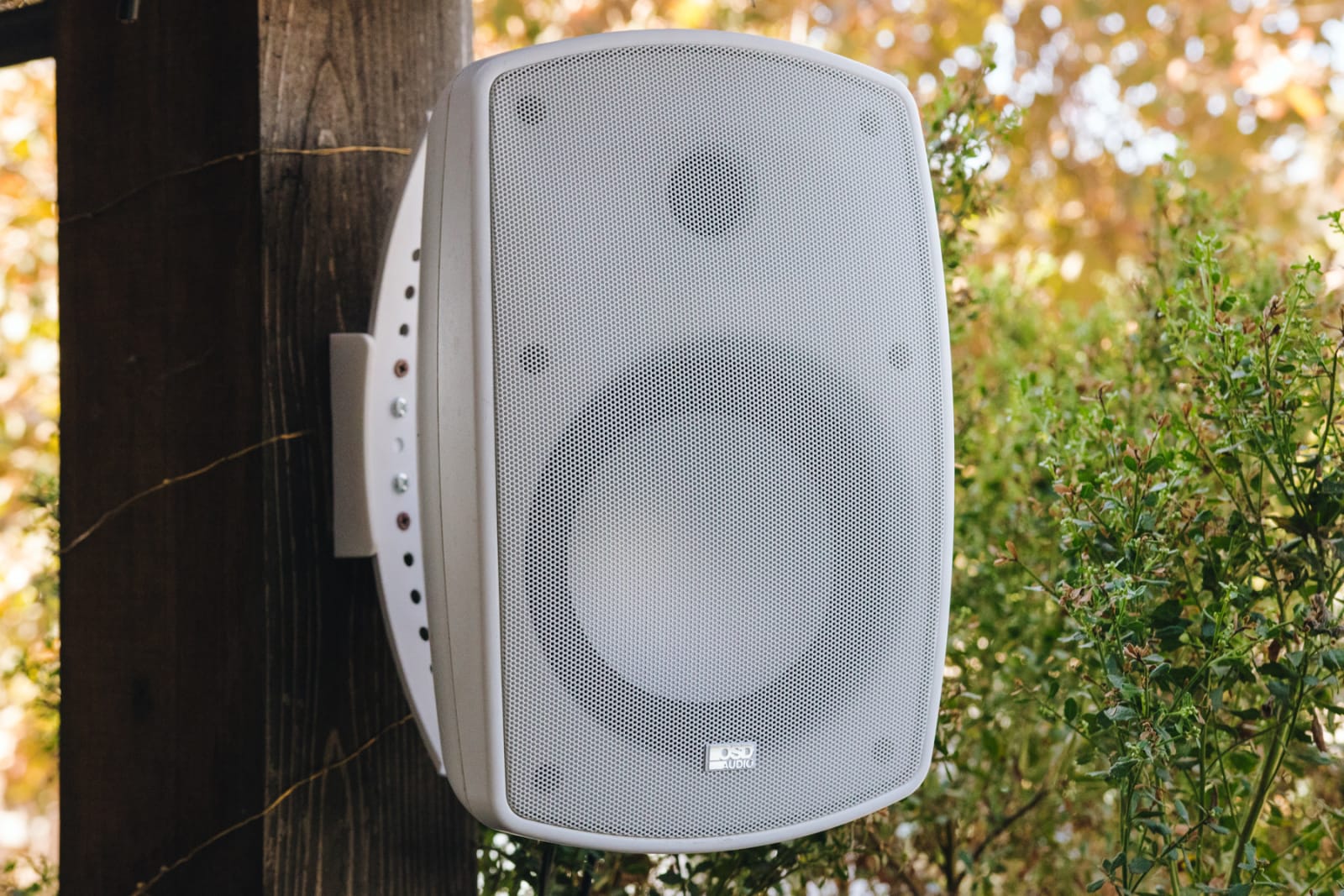
Outdoor speakers bring the music, radio, and podcasts we most love to one of the places we most love: the backyard. We think the OSD Audio AP650 is your best choice in an outdoor speaker because it is built to tolerate harsh weather and ward off invasion by dust and bugs, it mounts easily in all sorts of situations, and it can play loudly even when connected to a small, low-powered amplifier.
The OSD Audio AP650 is the best value we've found in an outdoor speaker. Its clarity beats anything we've heard from other models priced under $200 per pair, and it has a full, powerful sound that can easily fill a typical suburban backyard. It has enough bass for R&B, hip-hop, and rock music, and its relatively high sensitivity lets it deliver loud volumes when paired with a small amplifier. Because it's a fully sealed design, there's no concern about water, dust, or bugs getting in. It's also better made than most affordable outdoor speakers, with a thicker enclosure and a sturdy, powder-coated mounting bracket.
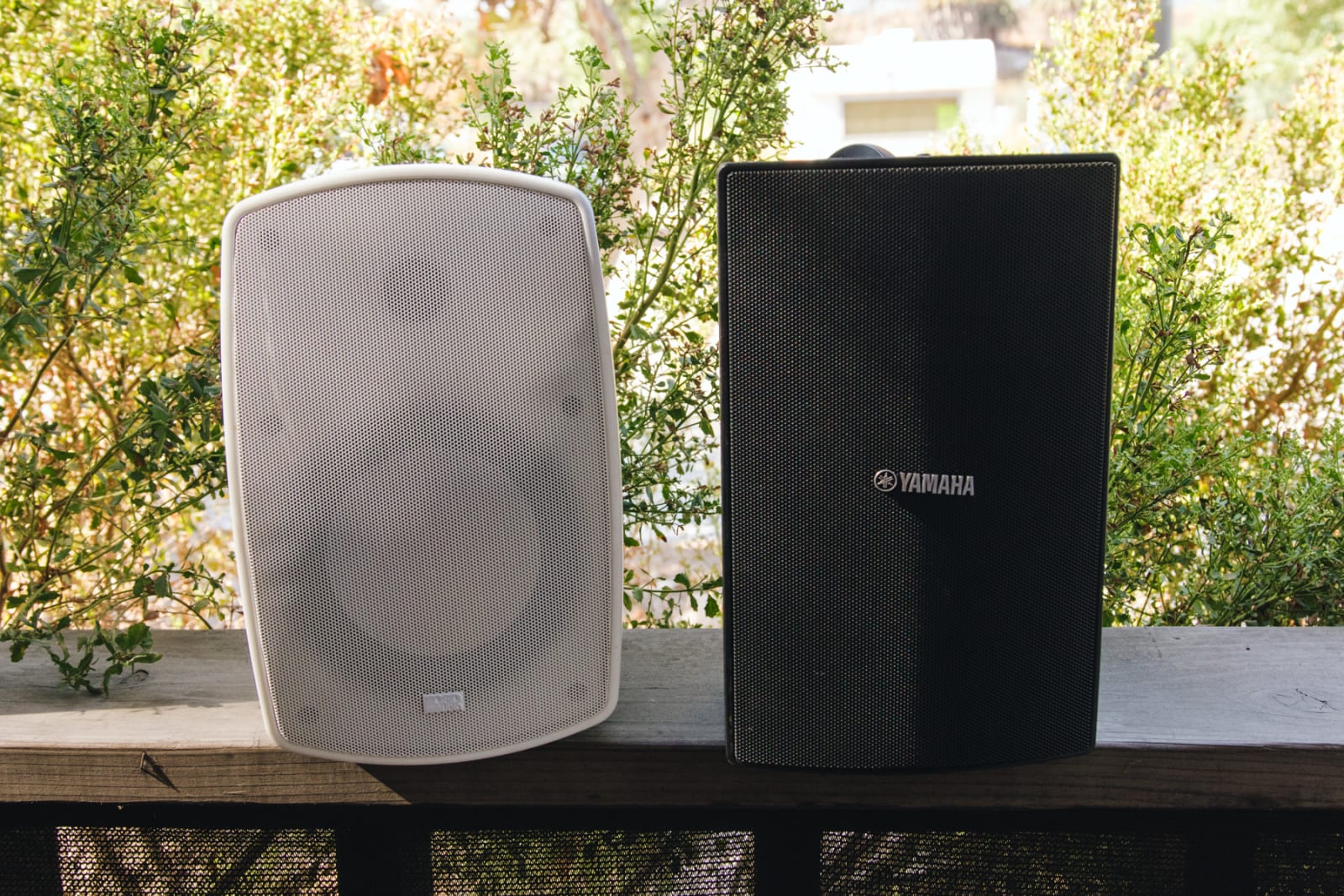
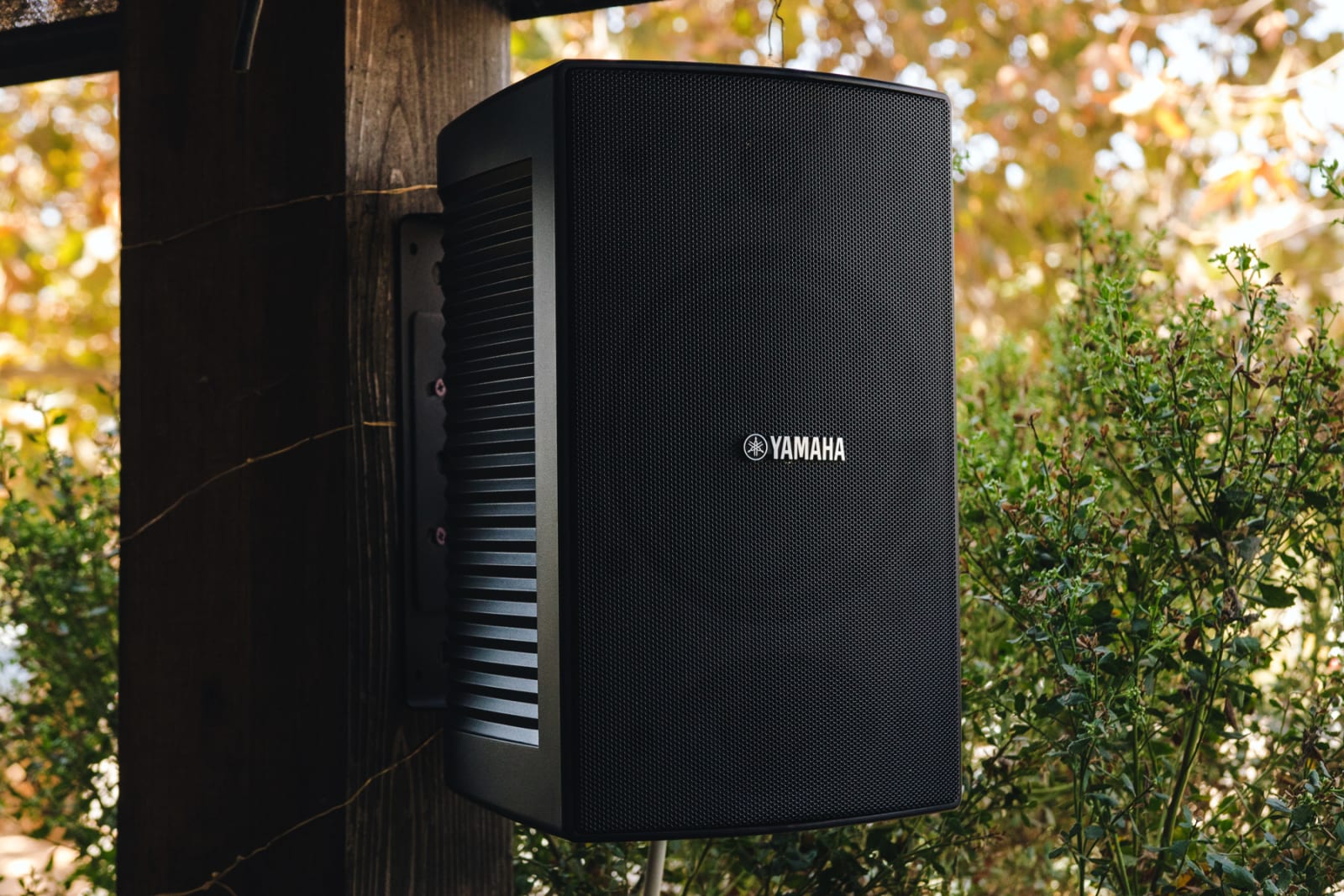
If you want decent outdoor sound but want to spend a little less, the Yamaha NS-AW294 is ideal—as long as you don't live in a place where blustery rainstorms are common, because the ported design may allow water to get in and damage the speaker. The NS-AW294 doesn't sound as clear as our top pick, but it does have a decent amount of bass and can play pretty loud.
Why you should trust us
I can confidently state that I've reviewed more passive (that is, non-Bluetooth) outdoor speakers than all other audio journalists in the world combined—a fact that says much less about me than it does about the almost total lack of attention these speakers get from audio publications. My outdoor-speaker testing experience includes numerous single-product reviews and six multi-product shootouts: one for Home Theater magazine, one for Home Entertainment magazine, one for Sound & Vision, and three for Wirecutter. I custom-built an audio switcher specifically to do blind testing. And perhaps most important, I have a backyard—and I'm not afraid to use it.
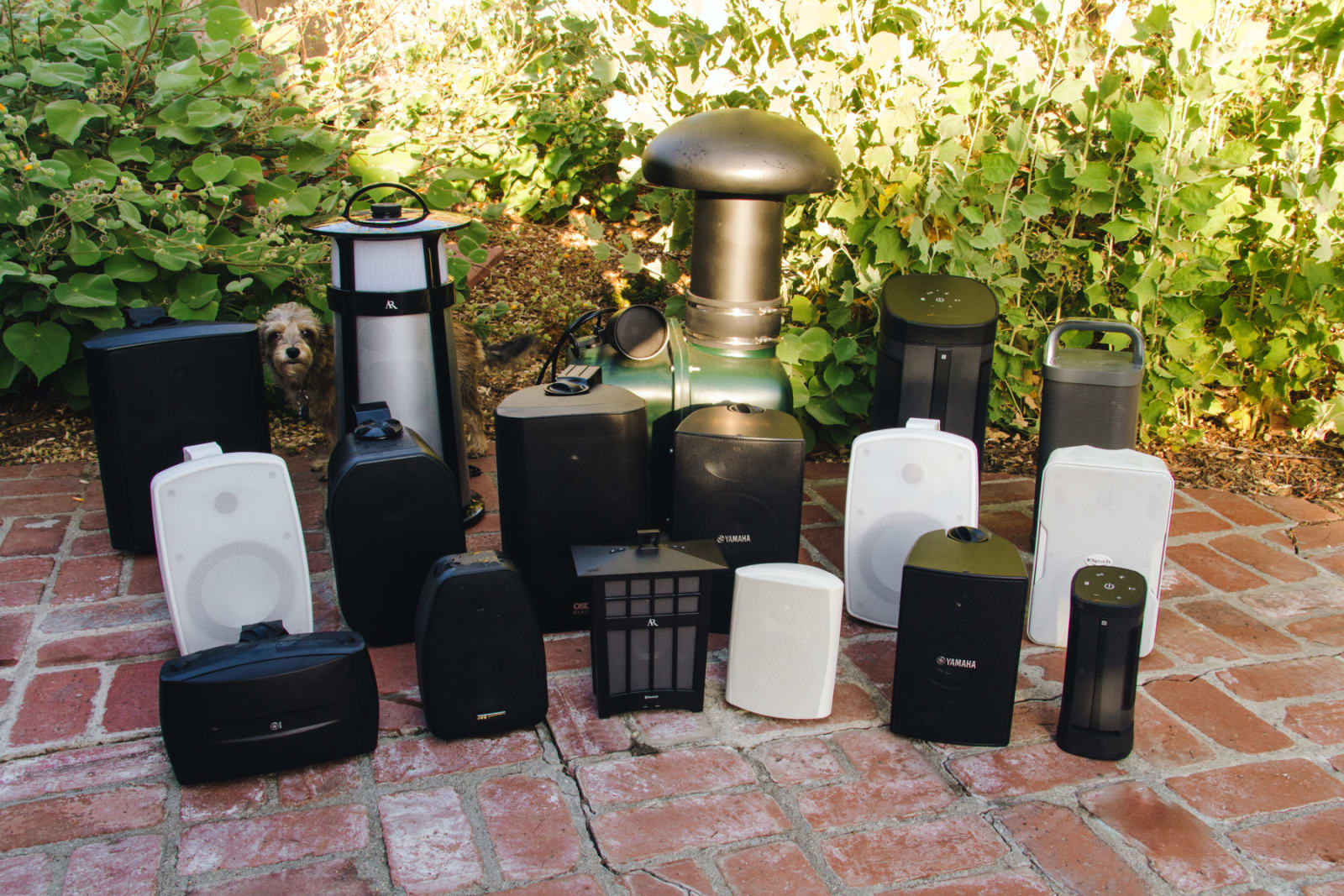
In the process of producing and updating this article over the years, I've also had listening input from three Wirecutter reviewers. Lauren Dragan, Wirecutter senior staff writer and headphone expert, has also written audio reviews for Sound & Vision magazine and has been a participant in numerous blind audio tests I've conducted in the past decade; she has a bachelor's degree in both music performance and audio production from Ithaca College. Wirecutter editor-at-large Geoffrey Morrison, who helped with all of our past tests, has two decades of experience reviewing audio gear for Home Theater, Sound & Vision, Forbes, and Wirecutter. For the most recent testing round, we were joined by Wirecutter junior staff writer Daniel Varghese, who covers the audio/video and smart-home categories. In all, this crew has evaluated a total of 39 outdoor speakers.
Who should buy an outdoor speaker
Photo: Rozette Rago
Anyone who likes to listen to music while hanging out in the backyard—and doesn't mind a bit of wiring and installation work—would enjoy having outdoor speakers. They're weather resistant, so in most cases you can leave them mounted outside for years without worrying about them malfunctioning due to water damage. (They may not survive severe weather such as hurricanes, and a few models will admit water under certain conditions.) They have metal grilles and fairly rugged plastic enclosures, so they'll usually survive impacts with errant volleyballs, and bugs will find it difficult or impossible to nest inside them.
Note, though, that outdoor speakers rarely, if ever, sound as good as a decent set of bookshelf speakers designed for indoor use. The plastic enclosures of outdoor speakers tend to vibrate and produce a boomy sound, and the perforated metal grilles tend to block or reflect some of the sound waves coming from the speaker drivers. I also suspect that, because manufacturers know that their outdoor speakers are unlikely to undergo heavy scrutiny, they don't put as much work into these designs as they do their indoor models.
You can connect passive (non-amplified) outdoor speakers to your existing home theater system. Most stereo receivers have a "speakers A/B" button that lets you route the sound to a second set of speakers, or you can use an inexpensive speaker switcher. You can also use one of the tiny Dayton Audio, Lepai, or Pyle amplifiers sold on Amazon or Parts Express for as little as $25. Add a Bluetooth adapter (or buy an amp with Bluetooth built in), and you can easily source digital music files, online streaming audio services, and podcasts from a smartphone, tablet, or Bluetooth-equipped computer, as long as you keep the Bluetooth adapter close to where you're sitting outdoors—typically 15 to 30 feet max.
You will have to keep the amplifier indoors and run the wires through your walls or attic to the outside of the house. Obviously, this operation requires a certain amount of skill and experience. Most localities allow running low-voltage (namely, audio, video, and networking) cables through walls without a permit, but you should check your local building codes to confirm. Be sure to use CL2- or CL3-rated cables, which are fire-rated for safety.
An alternative to all that complexity—one we haven't considered before this update—is a set of outdoor speakers with amplifiers and Bluetooth built in. With this option, the line between the two speakers and the connection to the power supply are the only wires to run. You'll need a nearby outdoor AC outlet, and you'll probably prefer to unplug the power supply when the speakers aren't in use.
Another alternative that we examined for the first time for this update is large, outdoor, "luggable" Bluetooth speakers. Many of these models have rechargeable batteries built in, so they work just like portable Bluetooth speakers, although most of them are too large to lug past your property line. Unfortunately, none of the models we tried appealed to our panelists; if you'd rather use a freestanding Bluetooth speaker than put up a pair of mounted outdoor speakers, we suggest considering one of the larger models in our review of the best portable Bluetooth speakers instead.
How we picked
Photo: Brent Butterworth
The outdoor speaker industry moves a lot slower than most of the audio industry; it's common for a model to stay on sale for many years. In fact, all of our top picks from the last version of this article are still available. However, the growth of highly price-competitive vendors such as OSD and Monoprice has not only greatly expanded the number of models but also apparently inspired a few of the bigger names to make less-costly outdoor speakers.
I started by scanning Amazon, Monoprice, Parts Express, and some other retail sites to find new models. I focused on models priced under $300 per pair because, in our blind tests, we've found that to be an approximate point of diminishing returns for outdoor speakers—that is, spending x percent more rarely gets you x percent better sound quality. I crossed any models that had poor owner reviews off my list, and then I contacted the manufacturers of the remaining models to request samples. I also solicited their suggestions for what models they thought would be most competitive in this test. We ended up with 11 conventional passive models, one Bluetooth stereo set, a subwoofer/satellite system, and a few "luggable" Bluetooth models.
Note that our focus on under-$300 models doesn't mean there aren't any outdoor speakers with better sound quality than the ones we discuss here. For example, I've been impressed with the $2,500 Sonance Sonarray system. However, anything substantially better will cost you several times as much as our top picks. Also, you'll probably have to buy them through a custom-installation firm, which means you're unlikely to get much of a discount and you'll probably have to pay the pros to do the installation. All of that isn't necessarily bad, but at that point your costs are many multiples of what we're talking about here.
Some outdoor speakers eschew the conservative design paradigm of most models we show here. You can find models shaped like rocks, frogs, fish, or even a dog (although sadly the fish and dog seem to be discontinued). We didn't cover these types because we assumed Wirecutter readers would be more interested in conventional models—please understand that this decision is in no way intended to disparage aficionados of zoomorphic outdoor speakers.
How we tested
I started by breaking in every speaker with music at a moderately loud volume for 10 hours. I then listened to them all in my backyard over a couple of days. If any speaker exhibited severe anomalies—such as distortion in deep bass notes or harsh treble that made voices sound grating—I eliminated it, knowing it would have no chance at becoming a top pick.
I ended up with 11 passive outdoor speakers. I decided to leave in all the Bluetooth models, since there weren't many of them. I knew that, with those models, the panelists' reactions would depend partly on the speakers' design.
Next, I set up some blind tests for myself with four speakers at a time, mounting the speakers side by side on large wood panels attached to the walls of my house, covering the speakers with thin black fabric, and using my custom-built testing switcher to match the levels of the speakers and select among them. After I had my results, I brought in Lauren and Daniel. They went through two rounds of four tests of the passive speakers, a third round to narrow down their final picks, and then a fourth round with the Bluetooth speakers. They used their own phones as the source, playing whatever music they wanted—although I insisted they add Tracy Chapman's "Fast Car," which the scientists at Harman Research have documented as the most revealing test material of all the recordings they've tried over the years.
After we completed the testing, we considered the performance, price, and design of the different models to come up with our final picks.
Our pick: OSD Audio AP650
Photo: Rozette Rago
In many ways, the OSD Audio AP650 is the outdoor speaker we've been looking for all these years. It's fairly inexpensive, it's rugged, it's fully sealed against weather and insects, and it sounds good. It has a 6.5-inch woofer for bass and midrange, and a 1-inch silk-dome tweeter for the treble. Its mounting bracket offers more range of adjustment and is powder coated for durability. You can hang a pair (or several pairs) of these speakers in the backyard and play whatever music you like, and they'll sound pretty good.
Lauren and Daniel both picked the AP650 as the clear favorite of all the speakers we tested, largely because it delivered a more even balance of bass, midrange, and treble than the other speakers. Bass and kick drum, sax and vocals, and cymbals and acoustic guitars all came across about even, and no instrument drowned out the others. Daniel said, "It's the only one that had a mix of all the things I wanted to hear." Lauren agreed: "In general, every range of audio is at least represented in some way."
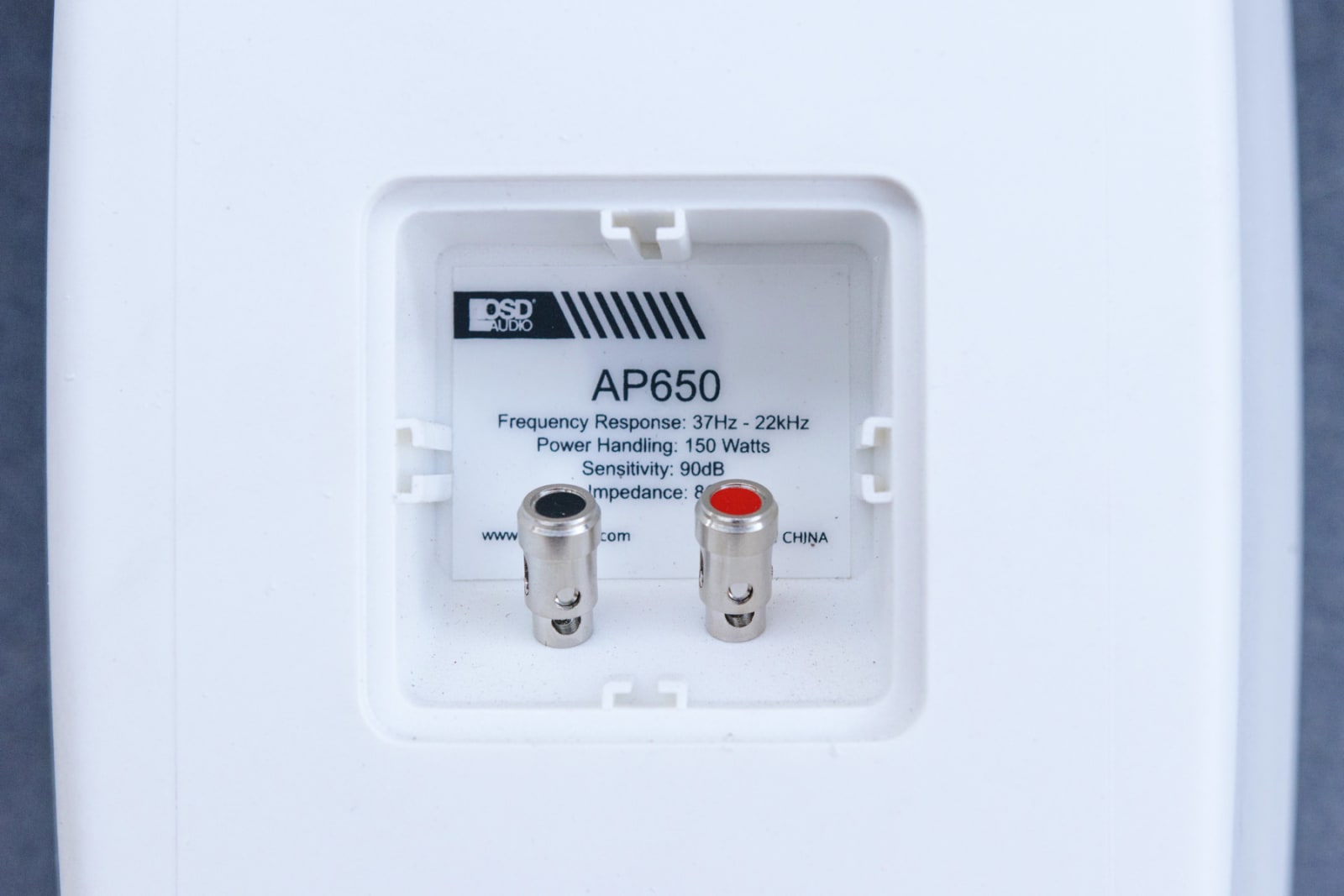
The AP650 features heavy-duty, spring-loaded, push-button binding posts that provide a reliable connection. Photo: Rozette Rago
It also sounded better than our previous top pick, the Dayton Audio IO655, because it sounded clearer and didn't rattle at high volumes. And it delivered a more balanced sound than our previous bass lover's pick, the OSD Audio AP670.
That balance wasn't perfect, though. We all found the midrange and treble a little boosted and coarse sounding, which Daniel aptly described as making voices sound "scratchy." But for an affordable outdoor speaker, it's pretty great. In fact, the only outdoor speaker we've encountered that clearly sounds better than the AP650 is the NHT O2-ARC, which costs a lot more (see the Competition section for more info).
Unlike our previous top pick, the AP650 (which, granted, is more expensive) is built to the quality standards of more costly models. The mounting bracket is curved and made with folded edges, which should make it stiffer, and it's powder-coated, so its finish shouldn't flake off as the Dayton IO655's did in places. Not only does the speaker swivel back and forth, but it can also tilt up or down plus or minus 25 degrees, thanks to a series of holes drilled in the bracket. This feature will come in handy if you have to mount your AP650 speakers high on an exterior wall.
The binding posts for the speaker cables are what I think are the best type for outdoor speakers: heavy-duty, spring-loaded, push-button binding posts. In my experience, this type provides a more reliable connection than the five-way binding posts found on many outdoor speakers (and most indoor speakers). OSD also provides a snap-on cover to help prevent water from dripping into the speaker connections. A 70-volt version of the AP650 is available for an extra $10 to $15 a pair; this option is useful if you want to string perhaps a dozen AP650 speakers around your yard, but it requires a special 70-volt amplifier.
Because the AP650 is a sealed design, you have no need to worry about water, dust, or bugs getting inside. Severe rainstorms are a once-a-decade occurrence at my Southern California home, but I did try blasting the AP650 with a hose, and it survived just fine. Unlike most outdoor speakers, the AP650 carries an IP (Ingress Protection) rating: IPX6, which means it can withstand powerful jets of water.
Reviews of outdoor speakers are rare, but Adam Gregorich, writing on Home Theater Forum, calls the AP650 "a great value for the money," adding, "I have paid over double in the past for similar looking name brand speakers that couldn't match the bass output." For what it's worth, the last time we checked Amazon, the AP650 had earned an overall rating of 4.4 out of five stars across more than 200 customer reviews, with a Fakespot grade of B. However, the reviews posted are for a wide variety of OSD speakers, and only a few specifically mention the AP650.
We also tested a powered, Bluetooth version of this speaker, the BTP650. We found that model's performance to be almost as good, with just a slight reduction in detail, bass, and punch that's likely due to the Bluetooth connection and weaker internal amps. We planned to make the BTP650 an also-great pick for someone who wants an all-in-one option that's easier to install, but its availability became nonexistent as we approached our publication date. We're waiting to see if it comes back in stock. OSD also sells a smaller version of the BTP650, the BTP525, that we can confidently recommend. It doesn't have as much bass, but otherwise it sounds at least as good, and it appears to be in stock as of this writing.
Runner-up: Yamaha NS-AW294
Photo: Rozette Rago
The Yamaha NS-AW294 is not built as well as our top pick, but it sounds better than most affordable outdoor speakers, and as of this writing it costs $20 to $30 less than our top pick. Our panelists all considered it a good deal relative to most of the other speakers we tested. Its styling is arguably a little nicer and less generic looking, right down to the swiveling logo that can adapt to horizontal or vertical positioning.
Compared with our top pick, the NS-AW294's sound was nice but not as robust in our tests. It had a decent amount of bass, and the fidelity of the bass was pretty good. "The lows have an actual pitch to them, not just a boom," Lauren noted. It put a mild emphasis on the treble, which added emphasis to cymbals, violins, and acoustic guitar and also made voices sound slightly thin. But that same character also seemed to give it a more spacious sound, something Lauren and I both noted.
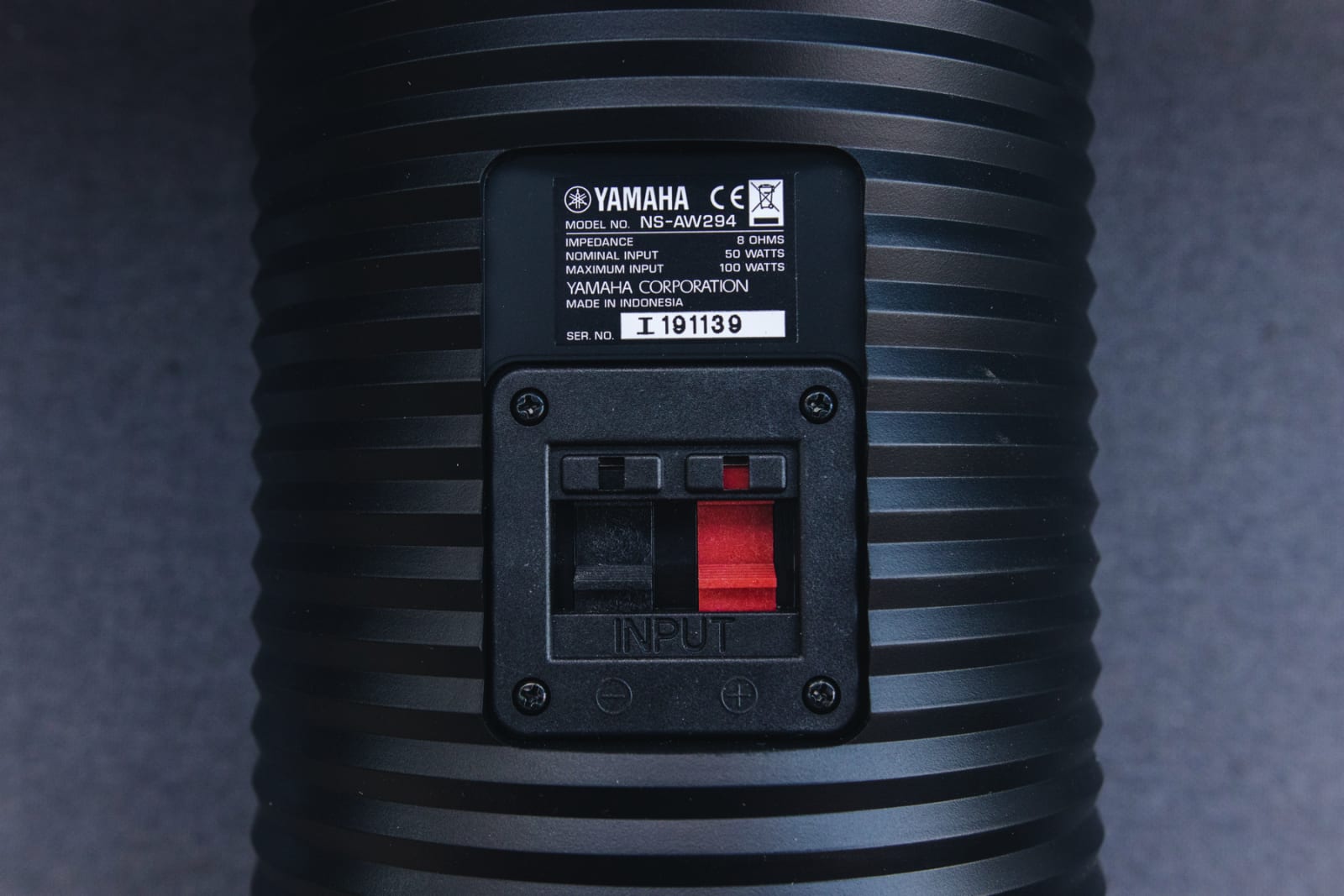
Even though the NS-AW294 is about 38 percent larger than our top pick, it's 34 percent lighter, largely because its plastic cabinet walls are much thinner. As with our top pick, its bracket has a powder-coated finish that should survive longer outdoors than the painted finish found on many inexpensive models. This speaker can't tilt vertically like our top pick can, but that feature is an advantage only in a few relatively rare situations. It has spring-loaded speaker cable terminals, but they're of the cheap plastic variety and require a very firm push to open all the way.
The NS-AW294 uses plastic, spring-loaded speaker cable terminals that require a very firm push to open all the way. Photo: Rozette Rago
The only major downside to the NS-AW294 is that it's a ported design, which means that water may get in and damage the speaker—although the small grille at the end of the port should prevent anything larger than a few millimeters across from getting in. I tried blasting the speaker's front grille with a garden hose for about six seconds, and when I shook the speaker around, I could hear that a couple of ounces of water had gotten in.
The NS-AW294 has a ported design that can allow water inside the speaker, but its metal grille should prevent large debris from getting in. Photo: Rozette Rago
However, a direct hose blast is a worst-case scenario for most outdoor speaker installations, and small amounts of water will eventually evaporate. One of our previous picks, the OSD AP670, also has a ported design, and it doesn't seem to be garnering many complaints about failure due to water damage. Still, if you live in a climate where heavy, windy thunderstorms are frequent, you might want to spend the extra money for our top pick. If you do choose the NS-AW294 for this type of climate, be sure to mount it under eaves where it won't be subjected to the direct force of thunderstorms.
Also, we noted a couple of complaints on Amazon about the grilles on the white version rusting, so it might be wiser to choose the black speaker for harsher climates.
We couldn't find any reviews of the NS-AW294 on tech websites or forums, but the last time we checked, it had earned an overall rating of 4.4 out of five stars across more than 150 customer reviews on Amazon, with a Fakespot grade of B.
What to look forward to
New outdoor speakers don't appear often, and many that do are extremely inexpensive models that, in our experience, sound bad and may tolerate only a couple of years of exposure to the elements. However, there are a few new Dayton Audio models we're curious about: the WP65BT5 and WP4BT pendant speakers, and the IO65XTW, which has a bass-reinforcing passive radiator. We hope to get samples of all three products to test.
The competition
We have evaluated numerous outdoor speakers in the course of several comparison tests conducted for Wirecutter and other publications. Although many of them fell far short of our top picks in performance, some of them are viable options. Here are the outdoor speakers we've tried (plus a few more that we researched but decided against testing), with brief explanations about why we didn't pick them.
BIC Adatto DV52si: This little indoor/outdoor speaker offered clear-sounding reproduction of voices and most instruments, but our panel deemed its bass output inadequate.
Bose 151 SE: We love the design of the 151 SE, but our panelists thought it sounded too midrange heavy, lacking bass output and clarity in the treble.
Dayton Audio IO655: This is our former top pick. It still sounds great for its price, although our panelists thought that our new top picks were a little better, and the paint tends to flake off its mounting bracket.
Definitive Technology AW5500: We generally liked the AW5500, but we found its midrange-heavy sound rather unengaging. It's pricey, too.
Fine Audio NV-03345: This outdoor Bluetooth speaker has very few positive reviews on Amazon.
Kicker KB6000: Our panelists thought the KB6000 had a blaring midrange that made singers sound more like they were shouting.
Klipsch AW-525: We found the treble of the AW-525 exceptionally clear, but we thought that it overpowered the midrange and the bass, making the sound somewhat thin.
Klipsch CP-6: The CP-6 didn't make the final testing round; I thought its bass sounded bloated and boomy, and its treble came across too sizzly and harsh.
MartinLogan ML-45AW: This little speaker offered wonderfully clear reproduction of voices and most instruments, but its bass distorted.
Monitor Audio Climate 60: Although the Climate 60 is a beautifully designed speaker, its midrange didn't sound very smooth, and it needed more bass.
Monoprice 13614: We found this speaker to have an extremely bright and blaring sound.
Monoprice Sycamore: This system consists of a separate subwoofer, intended to be mostly buried under the ground, and two small satellite speakers. We love the concept, but the tuning needed work; our panelists found the sound boomy and distorted.
NHT O2-ARC: The O2-ARC is one of the few expensive outdoor speakers that we think deliver a clear advantage over budget models. It's very well-made, and in our tests it sounded like a good indoor speaker. We considered making it an upgrade pick, but we have concerns about its availability.
Niles OS5.5: We think this model is above-average for a small outdoor speaker, but its bass and treble sounded somewhat boosted, which tended to make voices less prominent.
NXG NX-WRW-6W: On Amazon, this weatherproof Bluetooth system has too many complaints about the quality.
OSD Audio AP640: This inexpensive model didn't fare well in our panel tests—it didn't produce enough bass, and the balance of bass to midrange to treble sounded skewed.
OSD Audio AP670: This is a former top pick, but our panelists decided that the AP650 outperformed it and was much better-made.
OSD Audio AP840: I liked the AP840 for its big, powerful sound, but two of our panelists thought the bass obscured voices.
OSD Audio AP850: This big speaker sounded way too bassy to most of our panelists.
OSD Audio BTP650: We planned to pick the BTP650 as an also-great option for someone who wanted almost the same performance as in our top pick but in an easier-to-install powered form with built-in Bluetooth. Unfortunately, as we drew close to publication, we saw that the BTP650 was out of stock at every major retailer, so we were forced to remove it from our list of picks.
Pohopa B210D: This illuminated outdoor speaker has mixed reviews on Amazon, and the company seems to have no office in North America.
Polk Audio Atrium4: The Atrium4 sounded too midrange-heavy to our panelists, making voices and many instruments sound blaring.
Polk Audio Patio 200: This compact speaker didn't deliver enough bass to please our panelists; they thought it made voices sound somewhat shrill.
Pyle PDWR54BT: This Bluetooth stereo system has some complaints about quality on Amazon, and we think it's a bad idea for a Bluetooth model with internal electronics to use a ported cabinet that could let water in.
Rogersound Labs Outsider II: Our panelists thought the Outsider II sounded good but no better than our less-expensive picks.
Sound Appeal BT Blast: This Bluetooth stereo system had enough quality complaints on Amazon to make us skittish, especially since the company failed to answer our phone calls and emails.
Sound Appeal BT Blast Pro: Ditto. This model also has a ported enclosure, which we think is a bad idea for a speaker with internal electronics.
SpeakerCraft OE5 One: To our panelists, the OE5 One's enclosure seemed to boom and vibrate along with bass notes, and it made singers sound as if they had cupped their hands around their mouths.
Yamaha NS-AW150: I liked this compact and affordable small speaker, but our panelists thought it sounded unclear and thin.
Yamaha NS-AW194: We found that this smaller version of our runner-up had nowhere near enough bass to deliver satisfying sound.
Yamaha NS-AW390: This former top pick is good, and it's still for sale even though it's been replaced by new models, but our current top picks (and our previous top pick, the Dayton Audio IO655) sounded better in tests.
This guide may have been updated by Wirecutter. To see the current recommendation, please go here.