Caner Akcasu Blog

< <

<
<

<
<


Less than three years after merging with Musical.ly, TikTok looked like it might just achieve something many have tried but few have accomplished: becoming an actual competitor with Facebook and Instagram.

Then Donald Trump stepped in

After weeks of threats, the president delivered an ultimatum to TikTok and its owner ByteDance: sell the app’s US operations to an American company or it would be banned. He gave the company little more than a month — until Sept. 15 — to find a buyer and figure out how to disentangle itself from its Chinese parent company. 

More than a month later, TikTok’s future is still uncertain despite multiple interested buyers. China has fired back with new trade rules that could prevent a new owner from gaining access to TikTok’s most important feature: its recommendation algorithm.

Now, as the clock ticks down to Trump’s mid-September deadline, TikTok and its potential buyers are frantically working to figure out what it all means for a deal. An algorithm-less TikTok is a very different TikTok, and there’s no guarantee that Microsoft or Oracle would be able to replicate the app’s current recommendation magic. 

At the same time, Facebook has seized the opportunity to launch its own TikTok competitor with Reels. The Instagram feature so far hasn’t had a ton of success in the US, but the company is pushing it hard in other countries.

All that leaves TikTok in a precarious position. While the current uncertainty hasn’t affected its ability to keep its millions of users scrolling, that could change. If the company isn’t able to secure its future in the US, or is forced to relinquish the technology that makes it so addictive, the app’s influence could fade as quickly as it started.

Labels: , , , , , , , , ,

< <

<
<

<
<


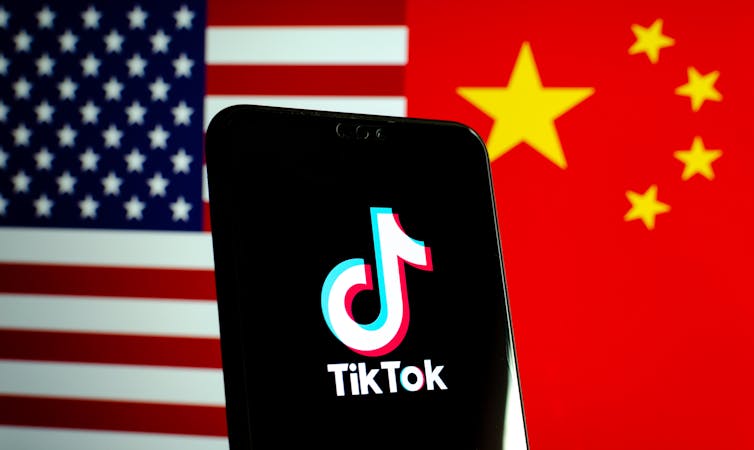
China's flags are seen near a TikTok logo in this illustration picture taken July 16, 2020. REUTERS/Florence Lo/Illustration

TikTok’s attempt to sell itself and avert a possible US ban may run into some complications. The Wall Street Journal reports that China has unveiled new restrictions on AI technology exports that could affect TikTok. The new rules bar the exports of tech like content suggestions, text analysis and voice recognition unless a company receives a license — technology TikTok uses in some cases.

The Chinese government has issued a not-so-subtle warning to TikTok parent ByteDance in turn. Government advisor Cui Fan told the state-run Xinhua News Agency that ByteDance should “seriously and cautiously” consider stopping its sales talks for TikTok. Even if ByteDance no longer has a stake in TikTok, there would probably be some technology transfers that could violate the rules, the advisor said.

The country’s Ministry of Commerce argued that the export list changes were overdue after remaining the same since 2008. It was important given the breakneck pace of technological improvement and China’s increasingly competitive output, according to officials.

Neither ByteDance nor the Commerce Ministry has commented on the new rules.

The move escalates an already intense dispute between China and the US. The two sides are already locked in a trade war, and the US has already implemented trade restrictions on companies like Huawei and ZTE over alleged security risks. The pressure on TikTok to drop ByteDance is an extension of this. In that regard, it’s not surprising that China is countering with tighter export limits. This theoretically pressures the US to make concessions and allow more access to Chinese tech.

Labels: , , , , , , , , ,

< <

<
<

<
<

 Microsoft has been the only company so far to say publicly it’s pursuing TikTok


Twitter has had preliminary discussions about a “combination” with TikTok, the Wall Street Journal reported, making the social media platform the latest possible suitor for the popular video-sharing app. As the WSJ notes, it’s not clear whether Twitter would pursue a possible acquisition of TikTok, and any such deal would have big obstacles.

The biggest challenge to any deal is the Trump administration’s executive order from August 6th, which bars TikTok parent company ByteDance from handling transactions in the US. The order takes effect within 45 days. The administration considers the Chinese-owned app a potential security threat, despite no evidence indicating ByteDance or TikTok has ever shared Americans’ data with the Chinese government. TikTok has said it plans to challenge the Trump administration’s order.

And then there’s Microsoft, the only company so far to publicly acknowledge it was in talks with TikTok owner ByteDance for a possible acquisition. The WSJ says Twitter would be considered a long-shot in a bid for TikTok, with Microsoft the likely front runner in any deal. Twitter is much smaller than Microsoft, and the WSJ’s sources say the social platform could be likely to face less antitrust scrutiny than Microsoft. But Twitter also doesn’t have as much money as the software giant for a possible purchase.

Microsoft said in an August 2nd blog post that its CEO Satya Nadella had spoken to President Trump about a possible TikTok acquisition, which would include TikTok operations in the US, Australia, Canada, and New Zealand. Microsoft said it expected its talks to wrap by September 15th.

Any deal with Twitter would involve TikTok’s US operations, according to the WSJ.

Twitter declined to comment. A TikTok spokesperson said the company does not comment on market rumors.

Labels: , , , , , ,

< <

<
<

<
<

 Earlier this week, Facebook finally released its latest attempt at a TikTok rival. It’s called Instagram Reels, and as its name suggests, it’s actually a feature that lives inside Instagram, without an app of its own. While incorporating Reels directly inside an already popular app gives it a good chance at succeeding, it also adds clutter and bloat to the Instagram experience, and after trying it out, risks confusing users. 

At first glance, Reels looks and feels extremely similar to TikTok. The username, caption and audio track are displayed on the lower left, and the way you flip through videos feels identical as well (you swipe up to scroll to the next video). It doesn’t hurt that Instagram has done a good job in seeding early access to influencers who are also big on TikTok; most of the early Reels’ content has the same kind of dances and amusing lip sync memes, if not direct copies of the videos that were already previously posted on the rival video app. 

Creating Reels will instantly be familiar to anyone who has used TikTok. You can speed up or slow down your videos, add AR effects and, of course, add audio tracks. If you want, you can also use the audio of someone else’s Reel to create your own video, which is an important element on TikTok that has helped make songs like Lil Nas X’s ‘Old Town Road’ go viral. Reels also has an align or “ghost” tool that is useful for making video jump cuts, a popular TikTok technique. 


But there are a few important differences between the two. For one thing, Reels are limited to 15 seconds, while TikTok videos can be as long as 60 seconds when you string four 15-second videos together. Additionally, you can’t post “Duets” -- which are side-by-side video responses -- on Reels like you can on TikTok. TikTok also has a few features that are designed for newbies, like templates that let you create photo slideshows and prompts to add text to your video. TikTok can even sense what it is that you’re taking a video of and offer an audio track suggestion to match. Another neat feature is that you don’t actually need to be a TikTok user to watch TikTok videos; you can just launch the app and view them without signing up. You can’t do that with Reels; you need to have an Instagram account to view the videos. 

Perhaps the most standout difference, however, is that Reels doesn’t really, well, stand out. The feature is not at all apparent when you launch Instagram. Instead, you have to head on over to the Explore tab, where Reels is given its own dedicated section at the top. From there you have to then tap it again to watch the videos. That’s at least two more taps needed to get to your video feed, compared to TikTok where the main feed is there the second you launch it.

In a way, it makes sense that Reels is tucked away in Explore; after all, you don’t want it to mess up the main feed of photos. But this also makes it a little harder to access. It’s this kind of strange juxtaposition that highlights one of the biggest problems with Reels: it feels like an interloper in the already-cluttered Instagram experience. 

The way that Reels implements its feed is an example of how it doesn’t really quite fit inside Instagram. With Reels, there is only one main Explore feed, which is generated via a combination of curated videos, popular reels across a variety of topics, plus ones that are based on your interests and the content you’ve liked and commented on. On TikTok, however, there are two feeds; one is the “For You” page, which is algorithmically-generated and personalized, and the other is for the people you’re Following. With Reels, there is no “Following” tab. Following a user on Reels just makes their photos show up on your main feed, the same as it would be if you followed anyone on Instagram. 

That means that if you “followed” somebody on Reels because of their cool dance moves, you would then see the rest of their photo/video content on your main feed. But just because you want to see somebody’s cool dance moves doesn't mean you want to see their vacation photos. Sure, you can mute their posts, but that’s yet another step you need to take to customize your feed. You can also just tap on an individual user account to see their collection of Reels in a separate tab, but again, that’s yet another action you have to take. 


One of the reasons for this awkwardness is that, fundamentally, TikTok and Instagram have slightly different purposes. TikTok is mostly known for sharing funny and fashionable memes with a strong entertainment element. Instagram, on the other hand, is largely known as a photo-sharing platform, which tends to have a more personal feel. For a regular user, the marriage of these two concepts doesn’t quite work.

Of course, there are outliers such as brands and wannabe influencers, and for them, Reels could be their ticket to Instagram stardom. As Engadget Senior Editor Karissa Bell said on TikTok, its aforementioned “For You” feed is one of the reasons that unknown personalities can gain a huge following just from a single video going viral. If Instagram were to implement a similar algorithm for its own Reels feed -- therefore surfacing lesser-known users with potentially viral content -- then this could result in the same thing. In fact, Instagram’s VP of Product Vishal Shah has said that the recommendations in Reels will be “separate” from the rest of Explore, with the idea that “Reels is a way for [new creators] to get discovered.” 

Instagram has tried something like this before with IGTV, to mixed results. It was supposed to take on YouTube, with longer original content mixed in with your usual Instagram photos and videos. Unlike Reels, Instagram gave IGTV its own app, and is experimenting with commercials to bring ad revenue to influencers. But it doesn’t seem to have taken off the way that Instagram wanted, seeing as the company removed the IGTV button from its main interface this year because “very few” people used it. It’s safe to say that IGTV hasn’t exactly become a huge YouTube rival. 


Perhaps the biggest reason Facebook is incorporating Reels into Instagram is that it worked so well with Stories. After all, Stories is a copy of Snapchat in the same way that Reels is a copy of TikTok, and Stories turned out to be a huge success for Instagram. Plus, Facebook did try to do a standalone TikTok clone called Lasso, but it just didn’t get enough users. Why not just tack on these extra features to an app that already has over a billion users instead of trying to get people to use a standalone one? 

But Snapchat and TikTok are very different apps. The reason Stories worked so well is that Snapchat back then was a little obtuse and difficult to understand, while Stories was easier to grasp. Plus, Stories have that aforementioned intimate feel that tends to be familiar to a lot of Instagram users who are already used to sharing personal photos and videos. 

Reels, on the other hand, feels very different; almost as if it were a clone of an entirely different app shoehorned into an existing one (which obviously it kinda is). Together with other elements like Stories, IGTV and a dedicated shopping hub, Reels is making Instagram feel as confusing and bloated as the Facebook app.

Also, while Stories is located front and center in Instagram, Reels is tucked away in a separate tab and is harder to find. It also lacks key features like Duets and is not all that friendly to newbies. Already, there is some confusion among Instagram users as to where the feature is and how to use it. While that’s not uncommon with new features, this is a sign that Reels might not be at all intuitive and therefore not all that welcoming to TikTok users.

If TikTok does end up being banned from the US, it’s entirely possible that users in the US will end up switching to Reels as a reasonable alternative. But social media is a fickle world, so nothing’s a sure bet. And if TikTok sticks around (in whatever form), then Reels risks being seen as a poor imitation, plus a confusing add-on to Instagram, thus alienating users of both platforms.


Labels: , , , , ,

< <

<
<

<
<


It looks like Donald Trump is about to make good on his promise to go after TikTok. The Trump administration will soon force ByteDance, the Chinese company that owns TikTok, to sell the app to a U.S. Owner, Bloomberg reports.

And there’s already one tech giant reportedly eyeing the video app: Microsoft. Fox Business reporter Charles Gasparino reports the company “is in talks to buy,” TikTok. The app, which has been downloaded 187 million times in the U.S. According to Sensor Tower, is frequently cited as one of the few credible competitors to Facebook. Facebook-owned Instagram is reportedly set to release its own copy of the app very soon.

It’s unclear exactly what steps Trump plans to take separate the U.S. Version of the app from its Chinese owners. According to Gasparino, Trump could force a sale via the Committee on Foreign Investment in the United States (CFIUS). The Trump administration used a similar tactic last year when it forced the Chinese owner of Grindr to sell the dating app to a U.S buyer.

In a statement, a spokesperson for TikTok said the company is “confident in the long-term success” of the app. "While we do not comment on rumors or speculation, we are confident in the long-term success of TikTok,” the spokesperson said. “Hundreds of millions of people come to TikTok for entertainment and connection, including our community of creators and artists who are building livelihoods from the platform. We’re motivated by their passion and creativity, and committed to protecting their privacy and safety as we continue working to bring joy to families and meaningful careers to those who create on our platform."

Microsoft didn’t immediately respond to a request for comment.

The news comes after weeks of speculation about TikTok’s future in the U.S. Secretary of State Mike Pompeo said earlier this month that the government was “looking at” banning the app, and Congress has recently moved to bar TikTok from federally-issued devices.

TikTok has maintained that the app operates independently from its Chinese parent company, and that it wouldn’t cooperate with requests to hand over user data. The company recently appointed an American CEO, former Disney executive Kevin Mayer, and has taken several steps to increase transparency of its policies and product.

Labels: , , , , , , , , , ,

< <
<

<
<


TikTok may drop its ties to China in very short order. Reuters sources claim TikTok’s Chinese owner, ByteDance, has agreed to sell its stake in the social network’s US operations to avert a possible ban. The agreement would have Microsoft protect American user data, according to the report, but Microsoft wouldn’t necessarily own TikTok itself — it would leave the possibility of another company taking stewardship.

The company told Engadget that it didn’t comment on rumors, but that it was “confident in the long-term success of TikTok.” It pointed to a video response to talk of a ban where US General Manager Vanessa Pappas said TikTok was “not planning on going anywhere.” Microsoft declined to comment. The White house has already declined to comment on whether or not this move would prevent a ban.

There’s no guarantee this would be enough. President Trump said on Air Force One that he would ban TikTok outright and rejected talk of allowing a sell-off. He suggested he would use an executive order or emergency economic powers to block the company. However, he also said this before word of a possible US deal emerged. If TikTok sheds its Chinese links, a ban might not have much effect.

A ban could have serious consequences if it remained intact for a significant period, and not just to TikTok’s bottom line. The company has about 100 million American users, and a sudden shutdown could both make people scramble to alternatives and possibly create resentment. It could affect creator money and TikTok jobs, too. In that regard, the social media giant might not have much choice if it wants to prevent chaos.

Update 8/1 5:08PM: The Wall Street Journal and The Information claim Microsoft has “paused” talks with TikTok following Trump’s suggestion he would ban the app. The tech companies were reportedly hoping to finish a deal by Monday, sources for the news outlets said. This doesn’t mean they’re scrapping the deal, but they apparently want “clarity” on what happens next.

Labels: , , , , , , , , , , , , , , ,

< <

<
<

<
<


TikTok will exit the Hong Kong market and cut off access to all residents of the semi-autonomous region, parent ByteDance told ReutersThe company has said that it’s concerned Hong Kong may fall under China’s jurisdiction after new security laws came into effect. “In light of recent events, we’ve decided to stop operations of the TikTok app in Hong Kong,” a spokesperson said.

Though ByteDance is based in China, the TikTok app itself is not available in the nation. Rather, China has access to another, similar app called Douyin. In addition, the company (led by former Walt Disney exec Kevin Mayer) recently decided to stop using Chinese moderators for the app and has said that no data is stored in China. All of that was done to avoid the impression in the US and other markets that the app or its data is controlled by the Chinese government.


All those efforts aren’t necessarily helping, though. When asked about it by Fox News, US Secretary of State Mike Pompeo said that the US is “certainly looking at” banning Chinese social media apps like TikTok. In addition, the US Senate recently asked intelligence services to probe TikTok to see if it presents any kind of a national security risk. TikTok was recently banned in India, along with dozens of other Chinese apps.

Facebook recently said it would “pause” responses to data requests from Hong Kong, despite the new security law that gives police the power to order companies to remove content. However, Apple, which still has a large presence in China, complied last year with communist government demands to remove a Hong Kong protest-tracking app.

ByteDance has continued to try to distance itself from China and by exiting Hong Kong now, is avoiding the appearance of any potential conflicts. TikTok previously said that it has 150,000 users in the city and a source told Reuters that it’s a money-losing region for the company.


Labels: , , , , , , , ,

<

AdSense Reklam Alanı