Want to know how Google’s Pixel 5 supports wireless charging despite a predominantly metal body? Google explained the essence of how it works, but a video teardown at PBKReviews (via 9to5Google) has eliminated the mystery altogether. There’s a large cutout in the middle of the otherwise aluminum shell that lets the wireless charging coil work its wonders — the bio-resin plastic you see on the outside merely gives the illusion of an uninterrupted surface.
The design is more familiar beyond that, with a few twists. Google has tucked millimeter wave 5G antennas near the volume rocker and top edge, and clips keep the screen firmly attached to prevent a repeat of issues with some Pixel 4 units. There may be further room for improvement, though. iFixit noted that Google is using a mainboard much like that on the Pixel 4, limiting the amount of room for a larger battery and other components.
The teardown reflects Google’s play-it-safe approach to the Pixel 5. While it’s willing to use a clever trick to add a staple feature like wireless charging, this isn’t a radical reinvention. The company is focused on delivering the fundamentals at a competitive price, and that apparently involves a conservative design.
The OnePlus Nord debuted to fairly solid acclaim over the summer, but it came with one notable caveat: It’s only available in India and parts of Europe. Mid-range phone fans in North America had to make do without, but won’t be true of the company’s new budget phones. OnePlus officially revealed the new Nord N10 5G and N100 this morning and confirmed that both devices would be launched in the UK, with a North American launch to follow.
“The OnePlus Nord N Series represents the next step in our strategy to expand our smartphone offerings to more price points,” said OnePlus CEO Pete Lau in a press release. “Now even more users can get a burdenless experience without sacrificing quality.”
The Nord N10 5G (£329/~$430) is the more capable of the company’s new budget phones, and packs Qualcomm’s new Snapdragon 690 chipset with 6GB of RAM and 128GB of storage. While it’s outgunned by the more common Snapdragon 765, the 690 is Qualcomm’s most affordable sub-6 5G-capable chipset and should certainly give the competition’s mid-range smartphone chips a run for their money.
That chipset also gives the Nord N10 5G the ability to run a high-refresh rate display -- in this case, a 6.49-inch Full HD screen that refreshes at 90Hz like the original Nord. And the similarities don’t end there: The Nord N10 5G also packs a quartet of rear cameras, though OnePlus didn’t just transplant the original Nord’s cameras into a new body. The N10’s 64-megapixel main camera will likely see the most use, followed by an ultra-wide camera with a 119-degree field of view. The last two cameras are considerably less conventional — one is a dedicated macro camera, and the other shoots solely in black and white.
Rounding out the N10 package are a 4,300mAh battery, dual speakers for stereo audio, support for OnePlus’s Warp Charge 30T fast charging, a rear-mounted fingerprint sensor and Android 11 (albeit painted over with the company’s OxygenOS 10.5 skin).
The Nord N100 is surprisingly good-looking, considering the price.
OnePlus
While the N10 seeks to fill the space just below the already-released Nord, OnePlus’s N100 (179/~$234) is aimed at the sort of budget shoppers brands like Motorola typically cater to. The standout features here include a 6.52-inch HD+ display and a 5,000mAh battery, along with a peculiar rear camera setup.
The primary 13-megapixel camera is the main draw, but it’s joined by secondary cameras that pitch in for bokeh-filled portraits and super-tight macro shots. Meanwhile, the rest of the N100’s internals are a bit more pedestrian: It uses one of Qualcomm’s relatively new Snapdragon 460 chipsets, paired with 4GB of RAM and 64GB of internal storage. (Contrary to reports that circulated before today’s announcement, the N100 also accepts microSD cards.)
More competition in the mid-range is always welcome, but it remains to be seen if OnePlus’s decision to go down-market will pay off. Early on, OnePlus built its brand around the idea that it made “flagship killers” — devices that ran as fast as premium offerings, but without the sky-high price tags. Now that OnePlus is embracing the idea of playing at every level of the market, it runs the risk of muddying that appealing message.
Then again, the potential upsides here are significant. Well before returning to the flagship smartphone space with its Edge+, Motorola clawed its way into profitability purely on the strength of its low-cost offerings. Without knowing anything about the carrier arrangements OnePlus may or may not have lined up, it’s tough to imagine OnePlus reaching similar levels of success. With the right deals in place, though, the company may just find itself carving out the kind of successful niche that other affordable phone makers simply haven’t been able to.
Motorola has been on a tear this year: It has announced or released more than ten new smartphones in 2020, and rumor has it there's at least one more big reveal coming soon. For what it's worth though, the brand's latest mid-range offering the -- Motorola One 5G -- might be its most appealing new release yet. It's not a flagship in the vein of the Edge Plus, or the continuation of an experiment like the Razr. Instead, it's a sub-$500 smartphone running a mostly clean flavor of Android 10 with a handful of unexpected features and an enormous battery. In other words, it's exactly the kind of introduction to 5G that Motorola's cost-conscious fans probably need.
There's just one catch, though. Motorola promised earlier this year it would release a 5G smartphone for under $500, and, well, you're looking at it. For now, though, the company declined to say how much less than $500 the One 5G will cost -- the most Motorola would say is that the phone will wind up on AT&T soon, and that a Verizon-friendly model with support for mmWave 5G is set to land in October. In other words, stay tuned for official pricing.
Now, onto the phone itself. Many mid-range 5G smartphones use Qualcomm's Snapdragon 765 and the Motorola One 5G is no exception -- it's paired here with 4GB of RAM and 128GB of internal storage, though you can add microSD cards as large as 1TB. (A quick aside: We usually see this chipset in slightly more expensive phones, but Qualcomm apparently slashed its prices earlier this year.) While Motorola's choice of chipset isn't much of a surprise, the rest of the stuff around it is: The phone features, among other things, a whopper of a 6.7-inch Full HD+ screen complete with HDR10+ certification and a 90Hz refresh rate. That means this display is just as big and runs just as smoothly as Motorola's flagship Endless Edge display; here's hoping its tall, 21:9 aspect ratio means regular people have a chance of wrapping their hands around this thing.
Motorola
Powering the whole shebang is a 5,000mAh battery, which we're hoping to see multi-day use from since it's paired with a chipset that sips power rather than gulps it. Meanwhile, around back sits a quartet of cameras: You'll spend most of your time shooting with the main, 48-megapixel wide sensor, but it's flanked by a 2-megapixel depth sensor, an 8-megapixel ultra-wide camera with a 118-degree field of view and a curious 5-megapixel macro camera for extreme close-ups. Now, the jury is still out on whether people are really clamoring for this kind of highly specialized sensor, but Motorola gets credit for sweetening the deal in an unusual way -- it gave that macro camera a tiny, proper ring light. (And in case you were wondering, no, you cannot use it as a more appealing kind of flash for the other cameras.)
The front-facing camera situation is similarly surprising, since Motorola saw fit to add two of them here. The first is a relatively straightforward 16-megapixel camera with an f/2.0 aperture, and you can count on this one to deliver the stronger selfies. The other camera, meanwhile, is an 8-megapixel ultra-wide that Motorola says can squeeze an extra three or four people into the frame at once. Throw in a side-mounted fingerprint reader, a headphone jack and NFC for all those COVID-era contactless payments, and it feels like we're looking at a phone that could give Google's new, cheap Pixels a real fight in the looming 5G mid-range smartphone war.
Of course, there is too often a gap between a phone's potential on paper and its performance in the real world. Motorola is eyeing an imminent launch so, stay tuned to see how its unusually appealing new phone stacks up against the competition.
Fall is nearly upon us, which means Apple is gearing up to unveil its newest iPhones. 2020 being what it is, however, it's far from business as usual over in Cupertino. Apple has already confirmed it will ship its new smartphones later than usual this year and has remained quiet about its next splashy launch event, but that's not all -- we're also expecting the company to unveil as many as four new iPhones in one shot.
While we wait for the full, official details to emerge, let's take a look at what we already know about the most unusual iPhone launch in Apple's history.
This story was first published on August 28, 2020, and last updated on the same day.
What's new this year?
Oh boy -- a lot, by the looks of things. Some new features, changes, and additions will be specific to the iPhone 12 and iPhone 12 Pro lines and we'll dig into those shortly -- let's begin with the updates we expect to appear across the board this year.
For one, Apple is said to be using OLED screens across all versions of the iPhone 12. This shift will be especially noticeable to people coming from devices like the iPhone XR and iPhone 11, which used Apple's "Liquid Retina" screens. Those were always pretty good by LCD standards, but going forward, people who don't want to pay for Apple's most expensive phones should still get some improved image quality.
More importantly, these new iPhones will also use the company's latest mobile chipset, which we expect to be called (what else?) the A14 Bionic. While it'll still be weeks before Apple explains its benefits in full, chipmaker TSMC offered something of a preview in the form of comments made during a recent earnings call. The A14 is all but certainly based on TSMC's 5nm fabrication process, which the company said should result in roughly 15 percent faster performance while saving 30 percent in power consumption. That's nothing to sneeze at, especially when you consider last year's A13 Bionic was already the fastest smartphone chipset out there. And that reduced power consumption should prove especially helpful now that Apple is finally embracing 5G.
2020 is the year 5G is finally starting to matter in the real world, so it's little surprise that all of Apple's new iPhones will support those next-gen networks. Well, some of them, at least. There are two kinds of 5G networks taking root around the world: sub-6 and mmWave. (Their names broadly refer to the swathes of electromagnetic spectrum each type of network operates in, but you don't need to worry about that.) All of Apple's new iPhones will play nice with the former since sub-6 networks are more common and cover more ground.
The bigger question is which models will support the world's faster -- but more geographically limited -- mmWave 5G networks. Rumors originally suggested that this feature would be exclusive to the iPhone 12 Pro line, but later reports insisted that all versions of the iPhone 12 could tap into all 5G networks. For now, that appears to be the case, but the matter is still being hotly debated.
What is the iPhone 12 series?
The iPhone XR and iPhone 11 have been exceptionally lucrative for Apple, and this year we're expecting two versions of the iPhone 12 to continue the affordable flagship tradition.
The basic iPhone 12 is said to pack a 5.4-inch OLED screen which, if true, would make it the smallest smartphone in Apple's line-up. (The relatively pint-sized iPhone SE uses a smaller 4.7-inch display, but is thought to be physically larger than the 12.) In addition to the A14 chipset we mentioned earlier, we're expecting the 12 to come with 4GB of RAM, though the amount of storage available remains a mystery. Right now, it seems very likely that we'll see iPhone 12s with 128GB and 256GB of storage, but some leakers have insisted there will be a 64GB model as well.
Meanwhile, the larger iPhone 12 Max and its 6.1-inch screen should feel very similar to the existing iPhone 11. Apart from obvious differences, like having a bigger display and battery, the 12 Max is said to be internally identical to its little sibling. That said, the same uncertainty about its storage tiers applies here as well. And no matter which version of the iPhone 12 strikes your fancy, both models will continue to use a rear dual-camera system, though details on those sensors are limited for the moment.
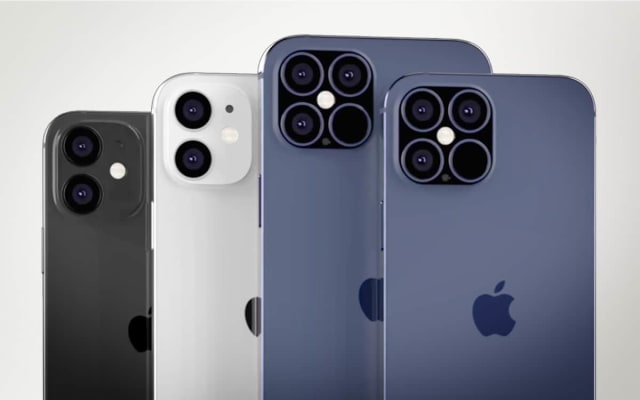
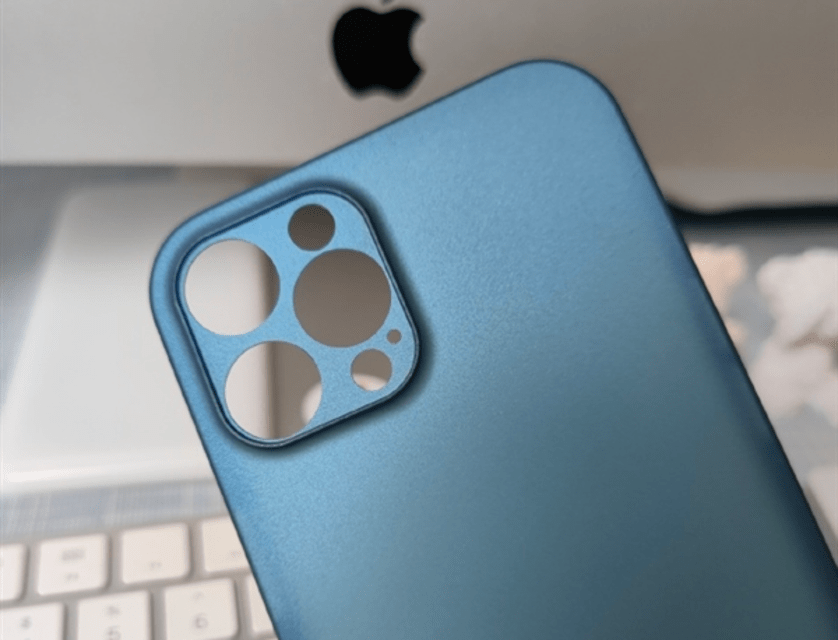
While the iPhone 12s' internals are largely agreed upon, there are still several lingering questions about its design. In a report published on April 13th, Bloomberg confirmed that the higher-end iPhone 12 Pro series would debut with a new, more angular design inspired by recent iPad Pros, but couldn't say the same of the less-expensive iPhone 12s. Since then, we've seen several dummy models allegedly built to Apple's specifications that suggest the iPhone 12 will feature that new design, though we'd suggest you take those with a grain of salt for now. Other possible design tweaks include a new notch that’s up to 30 percent smaller than the ones found in Apple’s current phones, but there currently isn’t a consensus on that potential change either.
What is the iPhone 12 Pro series?
The iPhone 12 and 12 Max might be the affordable flagships most people will buy, but the iPhone 12 Pro series is where Apple gets to push the limits of what we should expect from our smartphones.
As usual, the two Pro models share a common foundation that includes the A14 Bionic and 6GB of RAM, along with either 128GB, 256GB or 512GB of storage. Curiously, we're expecting the smaller iPhone 12 Pro to use a 6.1-inch Super Retina XDR display, which would make it roughly the same size (and potentially the same shape) as the more reasonably priced iPhone 12 Max. The iPhone 12 Pro Max, on the other hand, just might be the biggest iPhone Apple has ever made. While earlier iPhone screens have topped out at 6.5 inches, the 12 Pro Max's Super Retina XDR display is said to measure 6.7 inches diagonal. That's enough to make my wrist hurt in anticipation, but dummy models suggest the 12 Pro Max might not feel substantially larger.
These displays are said to have at least one key advantage over the panels used in the standard iPhone 12s: Improved refresh rates. Noted leaker Jon Prosser shared images on August 25th that seem to confirm the Pros' screens will have the ability to refresh at 120Hz for exceptionally smooth scrolling and animations. Those images also suggest the inclusion of a feature that allows the iPhone 12 Pros to "alter the refresh rate from 120Hz to 60Hz" depending on the kind of content being displayed.
As mentioned earlier, the iPhone 12 Pro and Pro Max will debut with a new -- and somewhat retro -- design. The devices' stainless steel edges are expected to be flat, making these phones look more like the classic iPhone 5 than more recent rounded models. (As someone who believes iPhone designs peaked around 2013, this is very good news indeed.) And just like last year, expect both versions of the iPhone 12 Pro to come with at least three rear cameras -- I say "at least" because there's a strong possibility that these devices might also include a LiDAR depth sensor like the one that debuted in this year's iPad Pro. Apple has slowly been building up its augmented reality teams, to the point where we’ve heard AR content may soon debut as a part of Apple TV+. Adding sophisticated depth-sensing technology like these LiDAR arrays to iPhones may seem impractical now, but it may have a profound impact on how the iPhone experience evolves down the road.
When will Apple announce these phones?We're not sure yet. Apple has been holding its annual iPhone press conferences in September since 2012 and tends to stage those events on the second Tuesday or Wednesday of the month. If Apple holds to that tradition this year, that would mean the event would be scheduled for September 8th or September 9th. Of course, 2020 has been anything but a normal year.
The leading candidate for a launch event right now is September 10th -- the day Apple itself accidentally scheduled a live YouTube stream for. However, Apple CFO Luca Maestri confirmed during the company's Q3 2020 earnings call that the new iPhones would be available "a few weeks" after the usual late-September launch window, likely due to production and supply issues stemming from the COVID-19 pandemic. Apple could hold a September event and release its new phones the following month, but it's just as possible that the show will be pushed to October so it more closely coincides with the launch window. With that in mind, prolific leaker Jon Prosser has already suggested that Apple will schedule its iPhone event for the second week of October.
The KEY2 was the last great BlackBerry TCL made before it discontinued its relationship with the brand. Chris Velazco/Engadget
BlackBerry faithful were dealt a harsh blow earlier this year when TCL, the biggest company to build phones for the brand, said it would stop. That left enthusiasts clinging to their KEY2s, wondering about would-be replacements, and raising glasses to the good old days — at least until an upstart Texas outfit announced plans to pick up where TCL left off.
OnwardMobility was incorporated in Austin as Onward88 in late 2018 by CEO Peter Franklin, and the startup has spent the years since piecing together an executive team and a strategy for making BlackBerry phones relevant in a 5G age. The announcement of its licensing deal with BlackBerry and Foxconn subsidiary FIH Mobile this week was very much the company's coming-out party, but it also raised a handful of big questions: Who are these people? Is this a B2B play? What's the new BlackBerry going to cost? And perhaps biggest of all, is this going to be the BlackBerry that fans have longed for?
In a conversation with Engadget, Franklin was eager to address some of these questions. And even when he declined to provide specifics, he laid out an ambitious — and in some ways surprising — vision for the BlackBerry of the near future.
The original plan, according to Franklin, was to build the "the most secure phone out there." That's the sort of angle that opens doors, but doesn't usually translate to mass-market success. Over time, however, the team's priorities came to include productivity, as evidenced by the number of times the word plastered on the OnwardMobility website. For now, the specifics are still shrouded in secrecy; Franklin wouldn't elaborate on the new BlackBerry's features apart from noting that the phone will pack "tons of unique experiences" and "security propositions." Still, that newfound focus on getting things done helped widen the project's scope considerably.
While OnwardMobility is eager to push new hardware at business and government customers, Franklin has committed to building this new phone with normal consumers in mind. "The only way to be successful with government and enterprise is if consumers want to use it too," he said. "If your company makes you use this phone and you don't like it, that's not where we want to be."
But here's the thing: OnwardMobility's definition of a phone consumers want to use seems totally different from TCL's, or any of BlackBerry's earlier licensing partners. Franklin describes the device the company plans to ship in the first half of 2021 as a consumer-first "global flagship" (his words, not mine) with a "world-class camera" and support for both sub-6 and mmWave 5G networks. And then there's the keyboard. OnwardMobility confirmed in its press release that the new BlackBerry would indeed have a physical keyboard, but Franklin — a fan of the classic Bold 9900 — wouldn't elaborate much on the phone's design.
Of course, that might be because the design isn't set in stone. According to Franklin, the team is collaborating closely with its partner FIH Mobile and has strong opinions about the device it wants to make, but still craves feedback. "We want to hear from the users," he said.
With all that said, there is at least one aspect of BlackBerry production that Franklin seems especially adamant about. Security remains the biggest priority for OnwardMobility, and a big part of fully securing a smartphone in 2020 is securing its supply chain. That's an exceptionally tough feat when you consider the lion's share of the world's hardware production happens within Chinese borders. FIH Mobile, Onward's manufacturing partner, knows that all too well. While its parent company Foxconn is headquartered in Taiwan, most of its smartphone production happens across multiple factories in Shenzhen.
Not so for the BlackBerry: Franklin insists that the company's forthcoming phone will be manufactured completely outside of mainland China. If that pans out, the likeliest candidates would be FIH's facilities in Vietnam or India; the company has been boosting production capacity there as trade friction between the US and China continues to build. Producing a phone outside of China is one thing, but Franklin seems to be chasing an even more ambitious goal. "We want to be the most American-made phone out there," he said. "The specifics of that and how we're enabling that are to come."
Despite working with a Foxconn subsidiary, OnwardMobility CEO Peter Franklin says the new BlackBerry will be "manufactured outside of mainland China." Siu Chiu / reuters
For now, it's unclear if the team intends to use more components sourced from US companies, or if OnwardMobility plans to push FIH to manufacture these phones closer to home. (The closest FIH production facility to the United States is in Chihuahua, Mexico, less than 250 miles from the US board. Parent company Foxconn also owns a massive plant in Wisconsin, though it's largely geared toward manufacturing LCD panels and components for servers.) Perhaps the final plan involves a bit of both, or neither; all Franklin will say for now is to stay tuned.
The idea of a mostly "American-made" phone will help Onward curry favor with the government and businesses hardening their infrastructures, but it's difficult not to imagine some kind of impact on the BlackBerry's price tag. Franklin repeatedly stressed that, while some trade-offs had to be made, he's proud of the direction the Onward team has settled on and that the device will be priced "competitively" for the market. "We want our features in as many of our fans' hands as possible," he said. "Price is a huge part of that." It should be noted, though, that Franklin declined to clarify if he meant competitive for the market at large, or competitive by flagship standards.
Either way, BlackBerry fans might be able to snag a deal through their wireless service provider. Like TCL before it, OnwardMobility plans to pitch this phone at people with the help of the nation's wireless carriers. Franklin confirmed that conversations are already in progress, but declined to say who with.
We can, however, make some educated guesses. It wouldn't be a huge leap to think that Verizon — currently the only carrier in the US with a mmWave network — is one such partner. (Verizon is Engadget’s parent company, but had no input into this story.) Franklin's background is largely in software and includes stints at Microsoft and Zynga, but a notable chunk of OnwardMobility's executive team previously worked at Sonim, a maker of rugged smartphones whose devices are often sold by Verizon and AT&T. And Pam Norris, who serves as Onward's SVP of product, had considerable experience working alongside AT&T. Her tenure at Huawei Device USA saw her "define product specifications and feature alignment" with AT&T's rigorous requirements until the carrier torpedoed its relationship with the Chinese phone maker just before CES 2018.
While our conversation left me with as many new questions as answers, it's still early days for OnwardMobility, and Franklin plans to hash out of a lot of the details in public. (The publicity push has already started: He guested on a special episode of the CrackBerry podcast the other day.) Only one day out of the gate, and OnwardMobility has managed to pull off a major feat: It got the BlackBerry community fired up again. But now the real work starts. It needs to build a phone to impress them, wireless carriers, businesses and government, and you.