Caner Akcasu Blog

< <

<
<

<
<
Samsung and Stanford 10,000PPI OLED display for VR
Samsung Advanced Institute of Technology

Ask VR fans about their gripes and they’ll likely mention the “screen door” effect, or the gaps between pixels that you notice when looking at a display so close to your eyes. That annoyance might disappear entirely if Samsung and Stanford University have their way. They’ve developed (via IEEE Spectrum) OLED technology that supports resolutions up to 10,000 pixels per inch — well above what you see in virtually any existing display, let alone what you’d find in a modern VR headset like the Oculus Quest 2.

The newOLED tech uses films to emit white light between reflective layers, one silver and another made of reflective metal with nano-sized corrugations. This “optical metasurface” changes the reflective properties and allows specific colors to resonate through pixels. The design allows for much higher pixel densities than you see in the RGB OLEDs on phones, but doesn’t hurt brightness to the degree you see with white OLEDs in some TVs.

This would be ideal for VR and AR, creating a virtually ‘flawless’ image where you can’t see the screen door effect or even individual pixels. This might take years to arrive when it would require much more computing power, but OLED tech would no longer be an obstacle.

It’s also more practical than you might think. Samsung is already working on a “full-size” display using the 10,000PPI tech, and the design of the corrugations makes large-scale manufacturing viable. It may just be a question of when and where you see this OLED rather than “if.”

Labels: , , , , , , , , , , , , , ,

< <

<
<

<
<


Google Maps wildfire info
Google

As wildfires continue to tear through parts of California and Colorado, Google has launched new tools to help people stay informed about their progress. Starting today, Google search queries for information about the fires will turn up more than just news stories and alerts -- they'll also display maps of the fires' boundaries. The Google Maps app will display the same wildfire boundaries to people attempting to enjoy the height of summer nearby, and will also provide warnings and "ambient alerts" to those who begin to approach affected areas.

But here's the most important part: That crucial fire map information is being updated hourly. To make sure people get the most accurate view possible, Google has been using its Google Earth Engine's analytics tools to monitor imagery provided by the National Oceanic and Atmospheric Administration’s four GOES satellites. Those satellites can't directly "see" the flames, but they can see the prodigious plumes of smoke those flames produce, along with the sizable thermal hotspots that signify areas of intense fire activity.

Google's tools here aren't new, strictly speaking -- the search giant piloted this map boundary feature during last year's wildfire season with input from emergency services officials in California and Colorado. That said, they're likely to be especially helpful this year.

As Google's Crisis Response Lead Yossi Matias pointed out in a blog post, the National Interagency Fire Center is forecasting above-normal wildfire potential throughout the United States with a window of risk that extends at least through September. And of course, the potential for devastating wildfires extends well beyond the US: Large swaths of Canada's prairies could also be at risk, and as of the end of July, wildfires in Russia had burned an expanse of forests and steppes larger than Greece. Unfortunately, these public-facing fire tracking tools remain exclusive to the United States for now, but a Google spokesperson confirmed to The Verge that the company hopes to roll them out internationally in the future.

Labels: , , , , , , , , , , ,

< <

<
<

<
<


As nations and NGOs around the world scramble to develop a safe and effective vaccine against the coronavirus, Russia claimed on Tuesday to already have one. "A vaccine against coronavirus has been registered for the first time in the world this morning," Russian President Vladimir Putin said on state TV during a press conference outside his residence. "I know that it works quite effectively, it forms a stable immunity." 

He is reportedly so confident of the vaccine’s efficacy that he has already inoculated one of his children with it. "One of my own daughters has tested the vaccine," Putin continued. "All she experienced was a slightly elevated temperature and [she] feels just fine." However, the breakneck speed at which the formula was developed — not to mention the monumental stakes at hand — has many medical researchers questioning whether Russia cut any corners in its efforts to be the first country with a viable vaccine. 

The formula, dubbed Sputnik-V in honor of the first satellite to reach space in 1957, was developed by Moscow’s Gamaleya Institute. However, the Institute has not released any developmental or scientific data relating to the vaccine’s creation, nor has it undergone peer review, so all we have to go on is what the Russians have publicly announced. Without that data, the World Health Organization cannot evaluate the vaccine’s safety or efficacy, Jarbas Barbosa, the assistant director of the WHO’s regional branch, the Pan American Health Organization, explained to Al Jazeera.

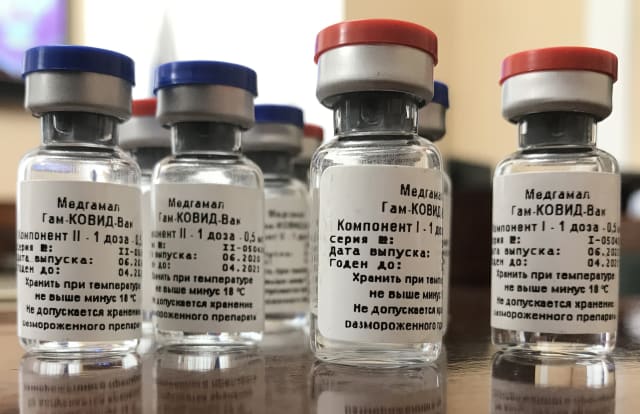
MOSCOW, RUSSIA - AUGUST 12, 2020: Ampoules with a COVID-19 vaccine developed by the Gamalei Scientific Research Institute of Epidemiology and Microbiology of the Russian Healthcare Ministry. Gam-COVID-Vac is a vector two-component adenovirus based vaccine. The vaccine will be available to general public on January 1, 2021. Mikhail Japaridze/TASS (Photo by Mikhail Japaridze\TASS via Getty Images)
Russian health officials have already noted that medical workers, teachers and other front-line groups will be among the first to receive the treatment when production ramps up in September. Putin plans to have doses ready for the general public come January but they won’t be the only ones to receive it. "We've seen considerable interest in the Russian vaccine developed by the Gamaleya Institute abroad. Moreover, we have received preliminary applications for over 1 billion doses of the vaccine from 20 countries," Kirill Dmitriev, head of the Russian Direct Investment Fund (RDIF), told CNN on Tuesday. A number of US companies are reportedly interested as well.

Now, while Putin said that the formula has been “registered,” that really only means that it’s gone through a bureaucratic process within the Russian Health Ministry -- akin to getting regulatory approval. What it has not completed is its Phase 3 clinical trial, a critical step in determining a drug’s safety for the general populace. 

Rigorous, clinical trials got their start in the 18th century when physician James Lind conducted a study into the cause of scurvy amongst sailors on long distance voyages. These trials grew into their modern form in the 1920s and 1930s with the introduction of randomization, replication, and blocking. Today’s trials are typically conducted in a series of phases: Phase 0 involves around 10 - 15 people and is done to see the basic effects of the drug on the human body using very small doses of the formula. Phase 1 screens for safety with a group of around 20 - 80 people to ensure that the drug won’t immediately kill or incapacitate anyone. Phase 2 determines the most effective dosages of the drug and the proper dosage range.

Phase 3 trials allow drug developers to test the formula’s safety and efficacy, spot potential side effects or interactions with other common pharmaceuticals and compare it to existing treatments. They usually require months to complete, involve thousands to tens of thousands of people, and typically come before a drug gets registered. For example, Moderna’s mRNA-1273 Phase 3 trial, which began in July and which has just landed a major supply deal with the US government, will rely on as many as 30,000 volunteers. 

“Although face coverings, physical distancing and proper isolation and quarantine of infected individuals and contacts can help us mitigate SARS-CoV-2 spread, we urgently need a safe and effective preventive vaccine to ultimately control this pandemic,” NIAID Director Dr. Anthony S. Fauci, said in a press release. “Results from early-stage clinical testing indicate the investigational mRNA-1273 vaccine is safe and immunogenic, supporting the initiation of a Phase 3 clinical trial. This scientifically rigorous, randomized, placebo-controlled trial is designed to determine if the vaccine can prevent COVID-19 and for how long such protection may last.”

Russia’s vaccine, on the other hand, is reportedly based on other members of the coronavirus family which can cause less severe colds and flus. Rather than wait for the results from tens of thousands of study cases, it appears that the Russians may have engaged in a form of intensive human challenge trial, starting with members of the research team themselves, then expanding to military service members and eventually the VIP cohort that Putin’s daughter was a part of. 

Per the US National Library of Medicine, Sputnik-V’s Phase 1 and 2 trials involved a total of 76 people. Among the 38 who were administered either one or two doses of the actual vaccine, all produced antibodies. The effects of the vaccine were reportedly mild with elevated temperatures and headaches being the most reported symptoms. 

“I hope that the Russians have actually definitively proven that the vaccine is safe and effective,” Fauci told ABC News correspondent Deborah Roberts this week, during the taping of an upcoming NatGeo keynote event. “I seriously doubt that they've done that.”

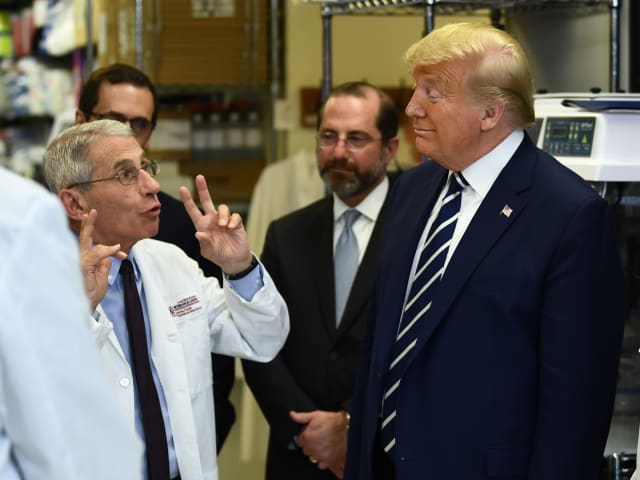
National Institute of Allergy and Infectious Diseases Director Tony Fauci speaks to US President Donald Trump during a tour of the National Institutes of Health's Vaccine Research Center March 3, 2020, in Bethesda, Maryland. - The US Federal Reserve announced an emergency rate cut responding to the growing economic risk posed by the coronavirus epidemic after the UN health agency said the world has entered "uncharted territory" with the outbreak's rapid spread. (Photo by Brendan Smialowski / AFP) (Photo by BRENDAN SMIALOWSKI/AFP via Getty Images)

Human challenge trials are much more direct than the multiphase trials described above. These “are trials in which participants are intentionally challenged (whether or not they have been vaccinated) with an infectious disease organism,” the WHO explains in its 2016 publication, Human Challenge Trials for Vaccine Development: regulatory considerations. “This challenge organism may be close to wild-type and pathogenic, adapted and/or attenuated from wild-type with less or no pathogenicity, or genetically modified in some manner.”

The very first vaccine ever developed was done through a human challenge trial in 1796 when English physician Edward Jenner deliberately infected his son with cowpox, which causes a mild reaction in humans, to protect the boy from its much deadlier cousin, smallpox. The tradition continues today with organizations like 1DaySooner advocating for coronavirus human challenge trials. It has already signed up more than 25,000 volunteers. However this method is not without its dangers, especially in the case of COVID-19.

“Human challenge studies are generally contemplated only when rescue with a lifesaving treatment or intervention is available should a vaccine candidate not protect a volunteer from the disease,” Michael Rosenblatt, Chief Medical Officer for Flagship Pioneering, argues in a June StatNews op-ed. “But there is no cure or treatment against the SARS-CoV-2 virus that can be deployed with confidence, making viral challenges particularly risky and ethically questionable.”

He also points out that while vaccines for diseases like the measles and mumps are fully effective, some vaccines — especially for adults — can be only 70 to 80 percent effective and as little as nine percent. “Imagine, for a moment, that a vaccine candidate undergoing testing turns out to generate immunity in 80 percent of those who receive it. Then 20 percent will become infected with Covid-19,” he wrote. 

Russia’s methodology has also drawn concern from the World Health Organization, which has requested that the Russian Federation adhere to international norms and regulations regarding vaccine development. 

“It’s vital that we apply all public health measures that we know are working, and we need to continue to invest in and accelerate the development of safe and effective treatments and vaccines that will help us reduce disease transmission in the future,” WHO spokesman Tarik Jasarevic said during a Tuesday press conference.

“We are in close contact with the Russian health authorities, and discussions are going on with respect to possible pre-qualification of the vaccine," he continued. To date, the “WHO lists 25 candidate vaccines in clinical evaluation and 139 in a pre-clinical evaluation.”

The world passed 20 million global infections this week so if we have any hope of getting back to a pre-pandemic normal, we’re going to need at least a couple of those vaccine candidates to prove effective.

Labels: , , , , , , , ,

< <

<
<

<
<


Due to the coronavirus pandemic, DARPA will no longer hold an in-person event for its third and final AlphaDogfight Trial that’s scheduled to take place from August 18th to the 20th. It’ll be held virtually instead, and both participants and viewers alike can watch online as artificial intelligence (AI) algorithms control simulated F-16 fighter planes in aerial combat. By the end of the three-day event, viewers will even get to witness a matchup between the top AI and an experienced Air Force fighter pilot who’ll also be controlling a virtual F-16.

The Department of Defense agency started the AlphaDogfight Trials to expand its base of AI developers under the Air Combat Evolution (ACE) program. ACE’s purpose is to automate air-to-air combat and to build human pilots’ trust in artificial intelligence, so they can fight side-by-side in the future. The first trial, which was held in November 2019, featured algorithms in early development.

DARPA held the second trial in January this year and pitted participants’ greatly improved algorithms against AI adversaries developed by the Johns Hopkins University Applied Physics Laboratory. Both trials were hosted in person at the APL.

The third trial will be streamed from the APL, as well, with eight teams flying against the lab’s AI adversary algorithms on the first day and then against each other in a round robin tournament on the second. It’s the first time the participants are pitting their AIs against one another in public. On the last day, the top four AIs will compete in a single-elimination tournament for the championship title. The last team standing will then get the chance to fly against an Air Force fighter pilot controlling a virtual plane.

Col. Dan “Animal” Javorsek, program manager in DARPA’s Strategic Technology Office, said in a statement:

“Regardless of whether the human or machine wins the final dogfight, the AlphaDogfight Trials is all about increasing trust in AI. If the champion AI earns the respect of an F-16 pilot, we’ll have come one step closer to achieving effective human-machine teaming in air combat, which is the goal of the ACE program.”

Teams from Aurora Flight Sciences, EpiSys Science, Georgia Tech Research Institute, Heron Systems, Lockheed Martin, Perspecta Labs, PhysicsAI and SoarTech make up the eight participants for trial 3. Interested viewers will have to register beforehand to able to tune in: US citizens have until August 17th to sign up, while everyone else has until August 11th. 


Labels: , , , , ,

< <

<
<

<
<

Many proposed anti-asteroid solutions involve knocking them off-course, which carries its own problems — what if you create a fragment that hits Earth regardless? Researchers might have a safer solution. They’ve proposed a system (spotted by Parabolic Arc) that would tether a threatening asteroid to a smaller rock, throwing off the larger body’s center of mass and steering it away from our homeworld. As the method only involves a giant cable, it wouldn’t risk cracking an object into pieces.

The scientists couldn’t test this in real life, of course, so they used a simulated version of Bennu to see how well their idea would work. It’s viable for protecting the planet in a range of conditions, the team said.

There are catches. You need a small asteroid in the first place, of course. Moreover, this requires considerably more time to implement than smacking an asteroid with a spacecraft or projectile. It would work well with a coordinated detection and response system, but might take too much time if observers are caught off-guard. It’s another tool in the arsenal, though, and it may be necessary when it’s likely just a matter of when an asteroid enters a collision course, not if.

Labels: , , , , , ,

< <
<

<
<

Don’t think SpaceX is toning down its spaceflight ambitions in light of the pandemic — if anything, the company is ramping things up. Elon Musk has confirmed a SpaceXFleet scoop (via TechCrunch) that SpaceX is hiring staff to help build “floating, superheavy-class spaceports” for Mars and Moon missions, not to mention hypersonic flights for Earth. The private spaceflight outfit had teased the possibility of seaborne ports in concept renders before, but the plans are only really solidifying now.

The focus suggests these ports will be geared around Starship, SpaceX’s reusable rocket intended for everything from hypersonic travel through to deep space exploration. Musk added that the plan “pretty much” lined up with a Twitter follower’s speculation that these ports would be refurbished oil platforms with Hyperloops to carry people to and from the land.


Ports on the water might be necessary. There are only so many locations where land-based spaceports are realistic, as rocket operators have to worry about safety and noise. Floating ports can remove much of the danger while placing launchpads closer to where they’re needed. However essential they are, you’ll probably be waiting a while for them when Musk doesn’t expect Earth-to-Earth test flights for “2 or 3 years.” This is more a peek at the future than a sign of anything happening sooner.

Labels: , , , , , , , , , ,

< <
<

<
<
Tesla doesn’t simply make automobiles. The organization also engineers, manufactures and installs solar panels -- both the traditional type and modules that appear like everyday roof tiles. And while the latter looks like it can be a course to more mainstream adoption of renewable electricity, the previous remains the cross-to solution for the solar enterprise. Tesla has updated its panels to be about 10 percentage greater green, and has additionally lowered its fees. for the reason that the sizes and designs of the panels are nevertheless exactly the identical, that’s a pretty wonderful improvement.


in keeping with Electrek, Tesla rated its medium-sized panel at 7.56 kW earlier than the update, but it’s now indexed as eight.sixteen kW. The fee has additionally dropped from $19,500 (earlier than federal incentives) to $16,000. That bump in performance, blended with an over 17 percentage charge drop, ought to persuade a respectable amount of homeowners to make the jump to solar electricity. 

not everything has been dandy for Tesla’s solar department, although. a few sun panels have brought about fires -- one at a Walmart keep and every other at an Amazon warehouse. The company additionally lately canceled years-lengthy preorders for its sun roof tiles. optimistically those greater efficient panels don’t have any foremost troubles.


Labels: , , , , , , , ,

<

AdSense Reklam Alanı